


{{ai-generated|date=October 2025}}
{{-generated|date=October 2025}}
[[Astronomer]]s have uncovered the most distant and powerful [[odd radio circle]] (ORC) ever observed, designated ”’RAD J131346.9+500320”’, located approximately 7.7 billion light-years from Earth. This extraordinary cosmic phenomenon consists of two massive intersecting rings, each spanning 300,000 light-years, surrounded by an even larger radio cloud extending nearly 3 million light-years. The discovery represents a significant milestone in our understanding of these enigmatic cosmic structures and marks the first ORC identified through citizen science collaboration.<ref name=”:0″>{{Cite web |title=Astronomers find the most powerful ‘odd radio circle’ ever seen |url=https://www.earth.com/news/astronomers-find-the-most-powerful-radio-ring-ever-seen-odd-radio-circle-orc/ |access-date=2025-10-09 |website=Earth.com |language=en}}</ref><ref>{{Cite web |last=Sauers |first=Elisha |date=2025-10-04 |title=Strange rings of light appear to link together in space in new discovery |url=https://mashable.com/article/space-discovery-odd-radio-circle |access-date=2025-10-09 |website=Mashable |language=en}}</ref><ref name=”:1″>{{Cite web |date=2025-10-06 |title=The Most Powerful Odd Radio Circle’s Intersecting Rings Are Giving Us The Finger |url=https://www.iflscience.com/the-most-powerful-odd-radio-circles-intersecting-rings-are-giving-us-the-finger-81059 |access-date=2025-10-09 |website=IFLScience |language=en}}</ref><ref name=”:2″>{{Cite web |title=Most powerful ‘odd radio circle’ to date is discovered |url=https://www.eurekalert.org/news-releases/1100627 |access-date=2025-10-09 |website=EurekAlert! |language=en}}</ref><ref name=”:3″>{{Cite journal |last1=Hota |first1=Ananda |last2=Dabhade |first2=Pratik |last3=Machado |first3=Prasun |last4=Das |first4=Joydeep |last5=Muley |first5=Aarti |last6=Purohit |first6=Arundhati |date=2025-09-25 |title=RAD@home discovery of extragalactic radio rings and odd radio circles: clues to their origins |url=https://academic.oup.com/mnras/article/543/2/1048/8267915 |journal=Monthly Notices of the Royal Astronomical Society |language=en |volume=543 |issue=2 |pages=1048–1057 |doi=10.1093/mnras/staf1531 |doi-access=free |issn=0035-8711}}</ref>
[[Astronomer]]s have uncovered the most distant and powerful [[odd radio circle]] (ORC) ever observed, designated ”’RAD J131346.9+500320”’, located approximately 7.7 billion light-years from Earth. This extraordinary cosmic phenomenon consists of two massive intersecting rings, each spanning 300,000 light-years, surrounded by an even larger radio cloud extending nearly 3 million light-years. The discovery represents a significant milestone in our understanding of these enigmatic cosmic structures and marks the first ORC identified through citizen science collaboration.<ref name=”:0″>{{Cite web |title=Astronomers find the most powerful ‘odd radio circle’ ever seen |url=https://www.earth.com/news/astronomers-find-the-most-powerful-radio-ring-ever-seen-odd-radio-circle-orc/ |access-date=2025-10-09 |website=Earth.com |language=en}}</ref><ref>{{Cite web |last=Sauers |first=Elisha |date=2025-10-04 |title=Strange rings of light appear to link together in space in new discovery |url=https://mashable.com/article/space-discovery-odd-radio-circle |access-date=2025-10-09 |website=Mashable |language=en}}</ref><ref name=”:1″>{{Cite web |date=2025-10-06 |title=The Most Powerful Odd Radio Circle’s Intersecting Rings Are Giving Us The Finger |url=https://www.iflscience.com/the-most-powerful-odd-radio-circles-intersecting-rings-are-giving-us-the-finger-81059 |access-date=2025-10-09 |website=IFLScience |language=en}}</ref><ref name=”:2″>{{Cite web |title=Most powerful ‘odd radio circle’ to date is discovered |url=https://www.eurekalert.org/news-releases/1100627 |access-date=2025-10-09 |website=EurekAlert! |language=en}}</ref><ref name=”:3″>{{Cite journal |last1=Hota |first1=Ananda |last2=Dabhade |first2=Pratik |last3=Machado |first3=Prasun |last4=Das |first4=Joydeep |last5=Muley |first5=Aarti |last6=Purohit |first6=Arundhati |date=2025-09-25 |title=RAD@home discovery of extragalactic radio rings and odd radio circles: clues to their origins |url=https://academic.oup.com/mnras/article/543/2/1048/8267915 |journal=Monthly Notices of the Royal Astronomical Society |language=en |volume=543 |issue=2 |pages=1048–1057 |doi=10.1093/mnras/staf1531 |doi-access=free |issn=0035-8711}}</ref>
=== LOFAR telescope observations ===
=== LOFAR telescope observations ===
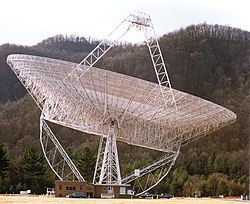
[[File:300 foot Radio Telescope before collapsed.jpg|thumb|A large radio telescope used for detecting cosmic radio waves, relevant to the study of cosmic phenomena such as Odd Radio Circles]]
[[File:300 foot Radio Telescope before collapsed.jpg|thumb|A large radio telescope used for detecting cosmic radio waves, relevant to the study of cosmic phenomena such as Odd Radio Circles]]
The detection was made possible through the Low Frequency Array (LOFAR), the world’s largest and most sensitive [[radio telescope]] operating at low frequencies between 10 and 240 MHz. LOFAR consists of 52 antenna stations distributed across eight European countries, creating a pan-European [[Interferometry|interferometer]] with unparalleled sensitivity and angular resolution at these frequencies.<ref name=”:6″>{{Cite web |title=LOFAR ERIC |url=https://www.lofar.eu/ |access-date=2025-10-09 |website=LOFAR |language=en-US}}</ref><ref name=”:7″>{{Cite web |title=LOFAR |url=https://science.astron.nl/telescopes/lofar/ |access-date=2025-10-09 |website=ASTRON Science |language=en-US}}</ref><ref>{{Cite web |title=Low Frequency Array LOFAR |url=https://www.mpifr-bonn.mpg.de/en/lofar |access-date=2025-10-09 |website=www.mpifr-bonn.mpg.de |language=en}}</ref><ref name=”:8″>{{Cite web |date=October 9, 2025 |title=LOFAR (Low-Frequency Array) |url=https://www.eoportal.org/other-space-activities/lofar |website=eoPortal}}</ref>
The detection was made possible through the Low Frequency Array (LOFAR), the world’s largest and most sensitive [[radio telescope]] operating at low frequencies between 10 and 240MHz. LOFAR consists of 52 antenna stations distributed across eight European countries, creating a pan-European [[Interferometry|interferometer]] with unparalleled sensitivity and angular resolution at these frequencies.<ref name=”:6″>{{Cite web |title=LOFAR ERIC |url=https://www.lofar.eu/ |access-date=2025-10-09 |website=LOFAR |language=en-US}}</ref><ref name=”:7″>{{Cite web |title=LOFAR |url=https://science.astron.nl/telescopes/lofar/ |access-date=2025-10-09 |website=ASTRON Science |language=en-US}}</ref><ref>{{Cite web |title=Low Frequency Array LOFAR |url=https://www.mpifr-bonn.mpg.de/en/lofar |access-date=2025-10-09 |website=www.mpifr-bonn.mpg.de |language=en}}</ref><ref name=”:8″>{{Cite web |date=October 9, 2025 |title=LOFAR (Low-Frequency Array) |url=https://www.eoportal.org/other-space-activities/lofar |website=eoPortal}}</ref>
LOFAR’s innovative design utilizes thousands of simple [[Antenna (radio)|antennas]] without moving parts, with signals digitally combined in software to create [[Radio imaging|radio images]]. This revolutionary approach provides more than two orders of magnitude better sensitivity than previous telescopes at these frequencies, making it ideally suited for detecting faint, extended radio structures like ORCs.<ref name=”:6″ /><ref name=”:7″ /><ref name=”:8″ />
LOFAR’s innovative design utilizes thousands of simple [[Antenna (radio)|antennas]] without moving parts, with signals digitally combined in software to create [[Radio imaging|radio images]]. This revolutionary approach provides more than two orders of magnitude better sensitivity than previous telescopes at these frequencies, making it ideally suited for detecting faint, extended radio structures like ORCs.<ref name=”:6″ /><ref name=”:7″ /><ref name=”:8″ />
=== Spectral analysis and power ===
=== Spectral analysis and power ===
Detailed spectral analysis reveals steep radio spectra with [[Spectral induced polarisation|spectral indices]] of α₅₄¹⁴⁴ = 1.22 ± 0.15 and α₁₄₄¹⁴⁰⁰ = 1.20 ± 0.10. These consistently steep values across a wide frequency range support interpretation of the emission as aged [[synchrotron]] [[Plasma (physics)|plasma]], characteristic of relic emission rather than ongoing jet activity.<ref name=”:3″ />
Detailed spectral analysis reveals steep radio spectra with [[Spectral induced polarisation|spectral indices]] of α₅₄ = 1.22 ± 0.15 and α₁₄₄ = 1.20 ± 0.10. These consistently steep values across a wide frequency range support interpretation of the emission as aged [[synchrotron]] [[Plasma (physics)|plasma]], characteristic of relic emission rather than ongoing jet activity.<ref name=”:3″ />
The integrated radio [[luminosity]] reaches 2.27 × 10²⁶ W Hz⁻¹ at 144 MHz, making it nearly two orders of magnitude more powerful than other known ORCs, which typically exhibit luminosities in the range 10²³–10²⁴ W Hz⁻¹. This extraordinary power, combined with its high [[redshift]] of z ≈ 0.94, establishes RAD J131346.9+500320 as both the most distant and most powerful ORC identified to date.<ref name=”:0″ /><ref name=”:2″ /><ref name=”:10″>{{Cite web |date=2025-10-03 |title=Narodowe Centrum Badań Jądrowych |url=https://www.ncbj.gov.pl/ |access-date=2025-10-09 |website=NCBJ |language=en}}</ref><ref name=”:3″ />
The integrated radio [[luminosity]] reaches 2.27 × 10 W at 144MHz, making it nearly two orders of magnitude more powerful than other known ORCs, which typically exhibit luminosities in the range 10–10 W . This extraordinary power, combined with its high [[redshift]] of z ≈ 0.94, establishes RAD J131346.9+500320 as both the most distant and most powerful ORC identified to date.<ref name=”:0″ /><ref name=”:2″ /><ref name=”:10″>{{Cite web |date=2025-10-03 |title=Narodowe Centrum Badań Jądrowych |url=https://www.ncbj.gov.pl/ |access-date=2025-10-09 |website=NCBJ |language=en}}</ref><ref name=”:3″ />
== Host galaxy and environment ==
== Host galaxy and environment ==
=== Galaxy cluster environment ===
=== Galaxy cluster environment ===
The host galaxy resides within a [[galaxy group]] or poor cluster at redshift z ≈ 0.9, containing at least 15 galaxies with similar redshifts. This cluster environment, with a mass of approximately 10¹⁴ [[Solar mass|solar masses]], provides crucial environmental context for understanding ORC formation mechanisms.<ref name=”:2″ /><ref name=”:3″ /><ref name=”:10″ />
The host galaxy resides within a [[galaxy group]] or poor cluster at redshift z ≈ 0.9, containing at least 15 galaxies with similar redshifts. This cluster environment, with a mass of approximately 10 [[ mass]], provides crucial environmental context for understanding ORC formation mechanisms.<ref name=”:2″ /><ref name=”:3″ /><ref name=”:10″ />
The presence of multiple galaxies with concordant redshifts within the ORC structure suggests that environmental density gradients and possible jet-galaxy interactions play central roles in shaping these ring morphologies. All three objects discovered in this study—including RAD J131346.9+500320—are found in galaxy clusters of similar mass, highlighting the importance of cluster environments in ORC formation.<ref name=”:3″ /><ref name=”:10″ /><ref name=”:2″ />
The presence of multiple galaxies with concordant redshifts within the ORC structure suggests that environmental density gradients and possible jet-galaxy interactions play central roles in shaping these ring morphologies. All three objects discovered in this study—including RAD J131346.9+500320—are found in galaxy clusters of similar mass, highlighting the importance of cluster environments in ORC formation.<ref name=”:3″ /><ref name=”:10″ /><ref name=”:2″ />
=== Black hole feedback mechanisms ===
=== Black hole feedback mechanisms ===
The formation of ORCs likely involves complex feedback processes between [[Supermassive black hole|supermassive black holes]] and their host galaxies. Supermassive black holes can drive powerful jets and winds that interact with surrounding gas, creating shock waves and bubble-like structures.<ref name=”:1″ /><ref>{{Cite web |date=2025-10-03 |title=Stunning Double Ring System Is The Most Powerful Odd Radio Circle Found So Far |url=https://www.yahoo.com/news/articles/stunning-double-ring-system-most-120051820.html |access-date=2025-10-09 |website=ScienceAlert via Yahoo News |language=en-US}}</ref><ref name=”:12″>{{Cite web |last=cern |date=2024-07-05 |title=Super-massive black holes quickly repoint their jets |url=https://cerncourier.com/a/super-massive-black-holes-quickly-repoint-their-jets/ |access-date=2025-10-09 |website=CERN Courier |language=en-US}}</ref><ref>{{Cite web |date=2024-08-01 |title=Astronomers uncover new phenomenon in growth dynamics of supermassive black hole {{!}} NSF – National Science Foundation |url=https://www.nsf.gov/news/astronomers-uncover-new-phenomenon-growth-dynamics |access-date=2025-10-09 |website=www.nsf.gov |language=en}}</ref><ref>{{Cite web |title=How black holes power galactic super-winds |url=https://www.mpa-garching.mpg.de/851474/hl202008 |access-date=2025-10-09 |website=www.mpa-garching.mpg.de |language=en}}</ref>
The formation of ORCs likely involves complex feedback processes between [[ black hole]] and their host galaxies. Supermassive black holes can drive powerful jets and winds that interact with surrounding gas, creating shock waves and bubble-like structures.<ref name=”:1″ /><ref>{{Cite web |date=2025-10-03 |title=Stunning Double Ring System Is The Most Powerful Odd Radio Circle Found So Far |url=https://www.yahoo.com/news/articles/stunning-double-ring-system-most-120051820.html |access-date=2025-10-09 |website=ScienceAlert via Yahoo News |language=en-US}}</ref><ref name=”:12″>{{Cite web |last=cern |date=2024-07-05 |title=Super-massive black holes quickly repoint their jets |url=https://cerncourier.com/a/super-massive-black-holes-quickly-repoint-their-jets/ |access-date=2025-10-09 |website=CERN Courier |language=en-US}}</ref><ref>{{Cite web |date=2024-08-01 |title=Astronomers uncover new phenomenon in growth dynamics of supermassive black hole {{!}} NSF – National Science Foundation |url=https://www.nsf.gov/news/astronomers-uncover-new-phenomenon-growth-dynamics |access-date=2025-10-09 |website=www.nsf.gov |language=en}}</ref><ref>{{Cite web |title=How black holes power galactic super-winds |url=https://www.mpa-garching.mpg.de/851474/hl202008 |access-date=2025-10-09 |website=www.mpa-garching.mpg.de |language=en}}</ref>
Recent studies demonstrate that black hole jets can rapidly change direction within timescales of just one million years, potentially creating complex radio structures through multiple episodes of activity. These feedback mechanisms play crucial roles in regulating [[star formation]] and galaxy evolution, with radio observations providing unique insights into these processes.<ref name=”:12″ /><ref>{{Cite web |title=Galaxy Formation – Joseph Silk et al. |url=https://ned.ipac.caltech.edu/level5/Sept13/Silk/Silk8.html |access-date=2025-10-09 |website=ned.ipac.caltech.edu}}</ref><ref>{{Cite web |title=Supermassive black holes and their role in galaxy evolution {{!}} Astrophysics I Class Notes |url=https://fiveable.me/astrophysics-i/unit-12/supermassive-black-holes-role-galaxy-evolution/study-guide/Q0PRTVISxZx42tn9 |access-date=2025-10-09 |website=Fiveable |language=en}}</ref>
Recent studies demonstrate that black hole jets can rapidly change direction within timescales of just one million years, potentially creating complex radio structures through multiple episodes of activity. These feedback mechanisms play crucial roles in regulating [[star formation]] and galaxy evolution, with radio observations providing unique insights into these processes.<ref name=”:12″ /><ref>{{Cite web |title=Galaxy Formation – Joseph Silk et al. |url=https://ned.ipac.caltech.edu/level5/Sept13/Silk/Silk8.html |access-date=2025-10-09 |website=ned.ipac.caltech.edu}}</ref><ref>{{Cite web |title=Supermassive black holes and their role in galaxy evolution {{!}} Astrophysics I Class Notes |url=https://fiveable.me/astrophysics-i/unit-12/supermassive-black-holes-role-galaxy-evolution/study-guide/Q0PRTVISxZx42tn9 |access-date=2025-10-09 |website=Fiveable |language=en}}</ref>
The discovery showcases the continued importance of human pattern recognition in identifying rare cosmic phenomena that escape automated detection algorithms. The RAD@home approach demonstrates how citizen science can complement professional research, particularly in the era of [[big data]] astronomy.<ref name=”:1″ /><ref name=”:4″ /><ref name=”:5″ /><ref name=”:10″ /><ref>{{Cite web |title=RAD@home: Citizen-Science Collaboratory |url=https://www.emergentmind.com/topics/rad-home-citizen-science-collaboratory |access-date=2025-10-09 |website=www.emergentmind.com}}</ref>
The discovery showcases the continued importance of human pattern recognition in identifying rare cosmic phenomena that escape automated detection algorithms. The RAD@home approach demonstrates how citizen science can complement professional research, particularly in the era of [[big data]] astronomy.<ref name=”:1″ /><ref name=”:4″ /><ref name=”:5″ /><ref name=”:10″ /><ref>{{Cite web |title=RAD@home: Citizen-Science Collaboratory |url=https://www.emergentmind.com/topics/rad-home-citizen-science-collaboratory |access-date=2025-10-09 |website=www.emergentmind.com}}</ref>
The success of LOFAR in detecting this distant ORC highlights the revolutionary capabilities of low-frequency radio astronomy. As more sensitive telescopes like the [[Square Kilometre Array]] come online, astronomers expect to discover many more ORCs, providing larger samples for statistical studies of these enigmatic objects..<ref name=”:2″ /><ref name=”:7″ /><ref name=”:11″ />
The success of LOFAR in detecting this distant ORC highlights the revolutionary capabilities of low-frequency radio astronomy. As more sensitive telescopes like the [[Square Kilometre Array]] come online, astronomers expect to discover many more ORCs, providing larger samples for statistical studies of these enigmatic objects.<ref name=”:2″ /><ref name=”:7″ /><ref name=”:11″ />
=== Future research directions ===
=== Future research directions ===
Astronomers have uncovered the most distant and powerful odd radio circle (ORC) ever observed, designated RAD J131346.9+500320, located approximately 7.7 billion light-years from Earth. This extraordinary cosmic phenomenon consists of two massive intersecting rings, each spanning 300,000 light-years, surrounded by an even larger radio cloud extending nearly 3 million light-years. The discovery represents a significant milestone in our understanding of these enigmatic cosmic structures and marks the first ORC identified through citizen science collaboration.[1][2][3][4][5]
Discovery and observational details
[edit]
Citizen science breakthrough
[edit]
RAD J131346.9+500320 was discovered on June 11, 2024, during an online training session of the RAD@home Astronomy Collaboratory, a pioneering citizen science initiative based in Mumbai, India. The discovery emerged through visual inspection of low-frequency continuum maps from the LOFAR Two-metre Sky Survey (LoTSS) DR2, when participants identified two intersecting ring-like structures centered on a compact radio core.[5]
The RAD@home Collaboratory represents a novel approach to astronomical research, training science-educated citizens to analyze multi-wavelength astronomical data and identify rare cosmic phenomena that automated algorithms might miss. Founded in 2013 by Dr. Ananda Hota, this zero-funding, zero-infrastructure platform has democratized astronomical research by enabling volunteers to participate in genuine scientific discoveries.[6][7][8][9]
LOFAR telescope observations
[edit]

The detection was made possible through the Low Frequency Array (LOFAR), the world’s largest and most sensitive radio telescope operating at low frequencies between 10 and 240 MHz. LOFAR consists of 52 antenna stations distributed across eight European countries, creating a pan-European interferometer with unparalleled sensitivity and angular resolution at these frequencies.[10][11][12][13]
LOFAR’s innovative design utilizes thousands of simple antennas without moving parts, with signals digitally combined in software to create radio images. This revolutionary approach provides more than two orders of magnitude better sensitivity than previous telescopes at these frequencies, making it ideally suited for detecting faint, extended radio structures like ORCs.[10][11][13]
Physical characteristics and structure
[edit]
Ring system properties
[edit]
RAD J131346.9+500320 exhibits a remarkable double-ring morphology, with each ring measuring approximately 300 kiloparsecs (approximately 978,000 light-years) in diameter. The entire structure extends over 800 kiloparsecs (2.6 million light-years), embedded within diffuse emission that rivals the size of giant radio galaxies.[5][14]
The twin rings display mild brightness enhancements at their intersection points, suggesting complex interaction between the overlapping structures. This configuration represents only the second known example of an ORC with intersecting rings, making it exceptionally rare among the handful of confirmed ORCs discovered to date.[4][5]
Spectral analysis and power
[edit]
Detailed spectral analysis reveals steep radio spectra with spectral indices of α₅₄144 = 1.22 ± 0.15 and α₁₄₄1400 = 1.20 ± 0.10. These consistently steep values across a wide frequency range support interpretation of the emission as aged synchrotron plasma, characteristic of relic emission rather than ongoing jet activity.[5]
The integrated radio luminosity reaches 2.27 × 1026 W Hz−1 at 144 MHz, making it nearly two orders of magnitude more powerful than other known ORCs, which typically exhibit luminosities in the range 1023–1024 W Hz−1. This extraordinary power, combined with its high redshift of z ≈ 0.94, establishes RAD J131346.9+500320 as both the most distant and most powerful ORC identified to date.[1][4][15][5]
Host galaxy and environment
[edit]
Central falaxy properties
[edit]
The radio emission originates from a faint optical galaxy (SDSS J131346.92+500319.3) with a photometric redshift of z = 0.937 ± 0.045. The central compact radio core exhibits a flat spectrum with spectral index ≈ -0.3, typical of active radio galaxy cores, and contributes 1.75 ± 0.18 mJy to the total flux density of 43.2 ± 4.1 mJy.[5]
Galaxy cluster environment
[edit]
The host galaxy resides within a galaxy group or poor cluster at redshift z ≈ 0.9, containing at least 15 galaxies with similar redshifts. This cluster environment, with a mass of approximately 1014 solar masses, provides crucial environmental context for understanding ORC formation mechanisms.[4][5][15]
The presence of multiple galaxies with concordant redshifts within the ORC structure suggests that environmental density gradients and possible jet-galaxy interactions play central roles in shaping these ring morphologies. All three objects discovered in this study—including RAD J131346.9+500320—are found in galaxy clusters of similar mass, highlighting the importance of cluster environments in ORC formation.[5][15][4]
Formation mechanisms and theoretical models
[edit]
Relic synchrotron origin
[edit]
The steep radio spectrum and morphological characteristics strongly support a relic synchrotron origin for RAD J131346.9+500320. ORCs are best understood as fossil radio shells that have been re-energized by external or internal processes, such as large-scale shocks induced by galaxy mergers, black hole mergers, or powerful superwinds.[1][5]
Recent theoretical work proposes that the rings may be linked to superwind outflows from spiral host radio galaxies. If a bipolar superwind from the spiral host initiates after radio lobes have reached a remnant phase, twin radio rings can form and expand to ORC dimensions over hundreds of millions of years.[4][5][16]
This model draws parallels to smaller-scale analogues like NGC 3079, where a polarized radio ring sits within a wind-blown radio bubble. Scaling up such processes under permissive environmental conditions could produce ORC-sized structures, particularly when involving “Speca-like” radio galaxies hosted by optically red disk galaxies capable of multiple episodes of growth.[5]
Black hole feedback mechanisms
[edit]
The formation of ORCs likely involves complex feedback processes between supermassive black holes and their host galaxies. Supermassive black holes can drive powerful jets and winds that interact with surrounding gas, creating shock waves and bubble-like structures.[3][17][18][19][20]
Recent studies demonstrate that black hole jets can rapidly change direction within timescales of just one million years, potentially creating complex radio structures through multiple episodes of activity. These feedback mechanisms play crucial roles in regulating star formation and galaxy evolution, with radio observations providing unique insights into these processes.[18][21][22]
Scientific significance and implications
[edit]
Understanding cosmic evolution
[edit]
RAD J131346.9+500320 provides unprecedented insight into cosmic phenomena occurring when the universe was only half its current age. The discovery demonstrates that powerful radio structures were already present in the early universe, offering constraints on models of galaxy and black hole co-evolution.[1][14][16][23][24]
The detection of such a distant and powerful ORC suggests that these phenomena may have been more common in the early universe, when galaxy formation and black hole growth were at their peak. This has important implications for understanding how supermassive black holes influenced their host galaxies through feedback processes during cosmic history.[23][25][26]
Methodological advances
[edit]
The discovery showcases the continued importance of human pattern recognition in identifying rare cosmic phenomena that escape automated detection algorithms. The RAD@home approach demonstrates how citizen science can complement professional research, particularly in the era of big data astronomy.[3][6][7][15][27]
The success of LOFAR in detecting this distant ORC highlights the revolutionary capabilities of low-frequency radio astronomy. As more sensitive telescopes like the Square Kilometre Array come online, astronomers expect to discover many more ORCs, providing larger samples for statistical studies of these enigmatic objects.[4][11][16]
Future research directions
[edit]
The discovery of RAD J131346.9+500320 opens new avenues for investigating ORC formation and evolution. Future observations with higher resolution and sensitivity will help determine whether the double-ring structure represents two distinct shells or a complex three-dimensional morphology viewed at an intermediate inclination.[5]
Polarimetric observations will provide crucial insights into magnetic field structures within the rings, while X-ray observations may reveal associated hot gas that could illuminate the underlying formation mechanisms. The expected discovery of more ORCs will enable statistical studies of their environments, host galaxies, and physical properties.[4][16][5]
- ^ a b c d “Astronomers find the most powerful ‘odd radio circle’ ever seen”. Earth.com. Retrieved 2025-10-09.
- ^ Sauers, Elisha (2025-10-04). “Strange rings of light appear to link together in space in new discovery”. Mashable. Retrieved 2025-10-09.
- ^ a b c “The Most Powerful Odd Radio Circle’s Intersecting Rings Are Giving Us The Finger”. IFLScience. 2025-10-06. Retrieved 2025-10-09.
- ^ a b c d e f g h “Most powerful ‘odd radio circle’ to date is discovered”. EurekAlert!. Retrieved 2025-10-09.
- ^ a b c d e f g h i j k l m n Hota, Ananda; Dabhade, Pratik; Machado, Prasun; Das, Joydeep; Muley, Aarti; Purohit, Arundhati (2025-09-25). “RAD@home discovery of extragalactic radio rings and odd radio circles: clues to their origins”. Monthly Notices of the Royal Astronomical Society. 543 (2): 1048–1057. doi:10.1093/mnras/staf1531. ISSN 0035-8711.
- ^ a b Rajoria, Megha; Purohit, Arundhati; Hota, Ananda (December 2021). “RAD@home Inter-University Collaboratory for citizen science in galaxy evolution with multi wavelength RGB images”. Proceedings of the International Astronomical Union. 17 (S375): 42–43. doi:10.1017/S1743921323000686. ISSN 1743-9213.
- ^ a b Hota, A.; Dabhade, P.; Machado, Prasun; Kumar, Avinash; Avinash, C.; Manaswini, Ninisha; Das, Joydeep; Sethi, S.; Sahoo, Sumanta; Dubal, Shilpa S.; Bhoga, Sai Arun Dharmik; Navaneeth, P. K.; Konar, C.; Pal, Sabyasachi; Vaddi, S. (2024-10-14). “Ten years of searching for relics of AGN jet feedback through RAD@home citizen science”. arXiv:2410.10294 [astro-ph.GA].
- ^ Kumar (avikhagol), Avinash. “about-us”. RAD@home India. Retrieved 2025-10-09.
- ^ Kumar (avikhagol), Avinash. “Home”. RAD@home India. Retrieved 2025-10-09.
- ^ a b “LOFAR ERIC”. LOFAR. Retrieved 2025-10-09.
- ^ a b c “LOFAR”. ASTRON Science. Retrieved 2025-10-09.
- ^ “Low Frequency Array LOFAR”. www.mpifr-bonn.mpg.de. Retrieved 2025-10-09.
- ^ a b “LOFAR (Low-Frequency Array)”. eoPortal. October 9, 2025.
- ^ a b Starr, Michelle (2025-10-03). “Stunning Double Ring System Is The Most Powerful Odd Radio Circle Found So Far”. ScienceAlert. Retrieved 2025-10-09.
- ^ a b c d “Narodowe Centrum Badań Jądrowych”. NCBJ. 2025-10-03. Retrieved 2025-10-09.
- ^ a b c d Simion @Yonescat, Florin (2025-10-02). “Most powerful ‘odd radio circle’ to date is discovered”. The Royal Astronomical Society. Retrieved 2025-10-09.
- ^ “Stunning Double Ring System Is The Most Powerful Odd Radio Circle Found So Far”. ScienceAlert via Yahoo News. 2025-10-03. Retrieved 2025-10-09.
- ^ a b cern (2024-07-05). “Super-massive black holes quickly repoint their jets”. CERN Courier. Retrieved 2025-10-09.
- ^ “Astronomers uncover new phenomenon in growth dynamics of supermassive black hole | NSF – National Science Foundation”. www.nsf.gov. 2024-08-01. Retrieved 2025-10-09.
- ^ “How black holes power galactic super-winds”. www.mpa-garching.mpg.de. Retrieved 2025-10-09.
- ^ “Galaxy Formation – Joseph Silk et al”. ned.ipac.caltech.edu. Retrieved 2025-10-09.
- ^ “Supermassive black holes and their role in galaxy evolution | Astrophysics I Class Notes”. Fiveable. Retrieved 2025-10-09.
- ^ a b Silk, Joseph; Begelman, Mitchell C.; Norman, Colin; Nusser, Adi; Wyse, Rosemary F. G. (2024-02-01). “Which Came First: Supermassive Black Holes or Galaxies? Insights from JWST”. The Astrophysical Journal Letters. 961 (2): L39. arXiv:2401.02482. Bibcode:2024ApJ…961L..39S. doi:10.3847/2041-8213/ad1bf0. ISSN 2041-8205.
- ^ Pacucci, Fabio; Loeb, Abraham (2024-04-01). “The Redshift Evolution of the M • –M ⋆ Relation for JWST’s Supermassive Black Holes at z > 4”. The Astrophysical Journal. 964 (2): 154. doi:10.3847/1538-4357/ad3044. ISSN 0004-637X.
- ^ Tombesi, F.; Cappi, M.; Carrera, F.; Chartas, G.; Fukumura, K.; Guainazzi, M.; Kazanas, D.; Kriss, G.; Proga, D. (2019-03-18), Astro2020 Science White Paper: Do Supermassive Black Hole Winds Impact Galaxy Evolution?, arXiv:1903.07664
- ^ Capelo, Pedro R.; Feruglio, Chiara; Hickox, Ryan C.; Tombesi, Francesco (2022-11-01), “Black Hole-Galaxy Co-evolution and the Role of Feedback”, Handbook of X-ray and Gamma-ray Astrophysics, pp. 1–50, arXiv:2211.00765, doi:10.1007/978-981-16-4544-0_115-1, ISBN 978-981-16-4544-0
- ^ “RAD@home: Citizen-Science Collaboratory”. www.emergentmind.com. Retrieved 2025-10-09.



