


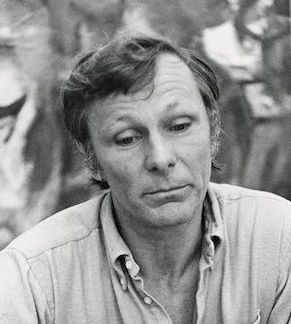
American publisher, entrepreneur, and environmentalist (1923–2015)
|
Richard Harrington Raymond |
|
|---|---|
 Richard “Dick” Raymond, c. 1968 |
|
| Born | (1923-11-30)November 30, 1923 |
| Died | September 16, 2015(2015-09-16) (aged 91) |
| Other names | Dick Raymond |
| Education | Miami University, Harvard University |
| Occupations | |
| Organizations |
|
| Known for |
|
| Notable work |
|
| Board member of | POINT Foundation |
| Spouses |
|
Richard Harrington Raymond (Nov 30, 1923 – Sep 16, 2015), publisher, entrepreneur, and organizer, was a key figure in Northern California environmental and cultural developments. His company, the Portola Institute, published the Whole Earth Catalog. Raymond co-founded the POINT Foundation to financially support the organization of environment- and community-related projects, and its many undertakings included the publication of the CoEvolution Quarterly. The Briarpatch Network — a mentoring and mutual-aid system to support small-scale entrepreneurs — was a brainchild of Raymond’s, launched in collaboration with a few friends.
Early life and education
[edit]
Raymond was born in Newark, Ohio, in 1923. His father worked for the U.S. Department of Agriculture. While growing up, he moved with his parents through the Midwest. He graduated from Miami University and served in the U.S. Navy Air Corps during World War Two. Following the war, he earned an MBA from Harvard Business School.[1]
Raymond moved to the San Francisco Bay Area in the 1960s and gained experience in a few start-up companies, including co-founding Rayturn Machine which developed the Irrigage soil-testing instrument.[1] Generally known as Dick Raymond, he worked in urban planning at the Stanford Research Institute (SRI), in Menlo Park, California where his specialties included land use, recreational economics, and community development. At SRI, one of his clients was the Century 21 Exposition (the 1962 Seattle World’s Fair); Raymond convinced the organizers to plan buildings that would remain on the site as part of the city’s heritage.[2] While employed at SRI, among the colleagues he became close friends with was chemist Roger S. Stringham, who decades later became deeply involved with independent experimentation in ‘low energy nuclear research’ or LENR.[3]
During his stretch with SRI, Raymond worked as a consultant to the Warm Springs Indian Reservation. At Stanford, he met the aspiring photographer and journalist Stewart Brand and was able to offer Brand a photography job on the reservation.[2]
Raymond was enthusiastic about emerging possibilities in alternative education.[4] He left SRI in 1966 and, using his own funds, he founded the Portola Institute to explore and support education projects; the Institute’s office was located on Merrill Street, in Menlo Park. By 1967 he believed that computers could contribute a valuable ingredient to education, even though personal-computing equipment was at that time known to few people. Looking back a half-century, a 2018 article in The New Yorker described the Institute as “a gathering place and incubator of sorts for computer researchers, academics, career engineers, hobbyists, and members of the counterculture.”[5]
University of Nevada history professor Andrew Kirk wrote that “The Portola Institute was one of the best examples of how creative communities were coalescing around a loose set of shared social and cultural goals in an effort to create new means for achieving personal and community success.”[6]: 43 Computer-application pioneer and author Robert Albrecht worked for a time with Portola, starting a “computer education division.”[7][8]
Not long after, Stewart Brand conceived of something he thought of as an “access catalogue” to help people locate useful information and tools to facilitate translation of their ideas into reality. Raymond provided mentoring and connected Brand with other local advisors. With Brand investing some of his own money, supplemented by backing from Portola, a trial issue of the Whole Earth Catalog (WEC) was produced in 1968.[9] PBS‘s “American Masters” series called the publication of the WEC a milestone in the history of environmentalism.[10]
A Cornell University online publication, in 2025, declared the ”Whole Earth Catalog captured the spirit of America’s first Earth Day celebration”[11] — while preceding the inauguration of that globally recognized observance by nearly two years.
Dick Raymond thought of “wealth” as having two aspects: the physical (the credit system, measured in money) and the non-physical (consisting of people, information, and ideas). He viewed the non-physical as having to do with problem solving. He felt this interpretation accorded with some writings recently published by economist Robert Theobald. Raymond was more concerned with the private sector than with political policies and programs; he espoused the idea that modern times called for American individuals to consider putting a little more weight on giving (in terms of the non-physical aspect of wealth) as compared with getting (or, as Raymond termed it, money-mindedness).[12]
Among other projects Raymond supported via the Portola Institute were the Homebrew Computer Club,[2] the Ortega Park Teachers Laboratory,[13] and the Integral Urban House.[14] An article in the New York Times, opined that Raymond’s Portola Institute “was Silicon Valley’s first true incubator.”[2]
Portola also published Richard Merrill and Thomas Gage’s technical Energy Primer: Solar, Water, Wind, and Biofuels, considered, for its time (1974), a fairly comprehensive introduction; Portola (in cooperation with Delta) published a second edition four years later.[15]
The WECs, published through nearly three decades, spawned a number of descendants and permutations, often involving editors who’d had first-hand experience with the Catalogs; these publications included the Whole Earth Ecolog (1990) and the Electronic Whole Earth Catalog (1989, a CD Rom version, utilizing hypertext).
With the first large (448-page) edition of the Whole Earth Catalog being published and widely circulated in 1971, the WEC’s financial success enabled Raymond and Stewart Brand to found the POINT Foundation.[16][6]: 122 purposed with providing grants for promising ventures. Raymond expressed a personal “premise” that “It’s more rewarding to ask good questions than to acquire a collection of everybody’s answers” — one of his a guiding principles.[17] He and Brand invited a group of board members with varied viewpoints but united by concern for the natural environment.[6]: 127 Michael Phillips served as the first president, and early board members included Bill English and Huey Johnson.
In 1972, one of POINT’s first large grants enabled a group of environmental scientists, activists, and Native Americans to attend the United Nations Conference on the Human Environment in Stockholm.[18]: 57 Huey Johnson was influenced by POINT to found a new park-creation and land-conservation advocacy organization, the Trust for Public Land, for which he was funded subsequent to serving on the board for two years; the Trust’s projects took root nationwide.[6]: 134 [19] Another early POINT grant recipient was the research center for agriculture, aquaculture, and bioshelter headed by John Todd and Bill McLarney, on Cape Cod.[20]
Portola Institute transferred the publishing of WECs to POINT in 1974.[21] Among varied other projects, POINT published the eclectic CoEvolution Quarterly starting in 1974,[6]: 165 Soft Technology (1978, a book edited by James T. Baldwin and Stewart Brand, and in 1985 POINT launched The WELL, an early online discussion community.[6]: 107
Michael Phillips, a friend of Raymond’s, was a Bank of California vice-president, and had been the organizer of Mastercard. When Raymond came up with the “Briarpatch” concept in 1973,[22] Phillips worked with him to assist small business; together they co-founded the Briarpatch Network, which opened a Bay Area office in 1974. The network functioned as a consulting and mutual-support organization providing free or low-cost services to small-scale entrepreneurs.[6] Warren Johnson, Chair of the Geography Department at San Diego State University, deemed the network an exemplary means of aiding people who expect their work to accord with their interests and passion, and referred to the Bay Area’s Briarpatch as “group of small, independent entrepreneurs doing what they want.”[23]: 191 For some owner-operators, this could afford the option for flextime work.
According to Phillips and co-author Greta Alexander, “The outwardly visible characteristic of the people who run Briarpatch businesses is that most are under 45 years old, [and] there is a high proportion of women owners.”[24] “Briarpatch makes its members keenly aware of their relationship to each other and the community. This is why it is referred to as a network rather than a group of people pursuing separate interests”, as Hal Richman reported in The Sun magazine.[25] A 1978 study of innovative workplaces in the Bay Area found the Briaratch Network to be exceptional in numerous respects, one of which was that it enabled members to avail themselves of a health plan, if they so wished.[26] Tallied in 1983, the Network’s records listed over a thousand people who had been members.[27] Prior to people typically owning digital devices, access for members-to-member information sharing, as well as advisor-to-member counselling, was generally face-to-face. In recent years, contact and information transfer within the Network has relied considerably on internet options.[28]
Later life and death
[edit]
Raymond relocated to Portland, Oregon and became involved in solar energy development. He also pursued projects related to unmanned flight,[1] and low energy nuclear reactions, or LENR.[29] In 2004, Raymond donated the Portola Institute and POINT Foundation files (correspondence, board materials, and project reports) to Special Collections in the Stanford University Libraries.[30]
He died at age 91, on September 16, 2015 at Lake Oswego, Oregon.[1]
During their youth, personal-computer pioneers and Apple Inc co-founders Steve Jobs and Steve Wozniak were both members of the Homebrew Computer Club.[31] which Portola Institute encouraged and gave some funding to. Jobs much later imparted in his Stanford University Commencement address in 2005: “When I was young, there was an amazing publication called the Whole Earth Catalog, which was one of the bibles of my generation. It was created … in the late 1960s, before personal computers and desktop publishing, so it was all made with typewriters, scissors and Polaroid cameras. It was sort of like Google in paperback form, 35 years before Google came along: it was idealistic, and overflowing with neat tools and great notions.”[32]
In Northern California during the 1970s, the original Briarpatch Network (as founded by Dick Raymond and Michael Phillips) spun off several similar small-business support groups in different communities, using the Briarpatch tag. Briarpatch members started to take advantage of the Internet as it began to emerge into popular usage. Claude Whitmyer, becoming the third coordinator of the original (San Francisco-based) Briarpatch branch in the 1980s, has been keeping it organized and active through the years.[33]
As one of the Internet’s initial open-membership conferencing systems, the Whole Earth ‘Lectronic Link (the WELL) — founded in 1985 by POINT — persists to the present, and thus has enjoyed a rare longevity. Briarpatch members were among the first to make use of benefits the WELL offered. Coordinator Claude Whitmyer, for example, was one of the earliest members of the WELL.[34][35]
The WELL and its success provided a model which led to various spinoffs. In locations like Austin, Texas people started very similar membership conferencing systems platformed by software named Yap.[36]
- ^ a b c d “Dick Raymond”. Oregon Live. The Oregonian. December 7, 2015. Archived from the original on October 9, 2024. Retrieved February 21, 2025.
- ^ a b c d Markoff, John (November 21, 2018). “Access to Success”. Alta. San Simeon Films. Archived from the original on December 13, 2024. Retrieved February 21, 2025.
- ^ Macy, Marianne. “Roger Stringham and the Walrus” (PDF). Infinite Energy. Retrieved September 13, 2025.
- ^ Collier, Peter (March 7, 1971). “Drop-out’s How-to”. The New York Times. Archived from the original on January 30, 2020. Retrieved October 8, 2024.
- ^ Wiener, Anna (November 15, 2018). “The Complicated Legacy of Stewart Brand’s “Whole Earth Catalog”“. The New Yorker 100. Advance Publications. Retrieved May 2, 2025.
- ^ a b c d e f g Kirk, Andrew G. (2007). Counterculture Green: The Whole Earth Catalog and American Environmentalism. University Press of Kansas. ISBN 978-0-7006-1545-2.
- ^ Betts, Edward. “Buckminster Fuller”. monograph. Edward Betts. Archived from the original (online extracts) on January 2, 2025. Retrieved February 16, 2025.
- ^ “My Computer Likes Me”. BeatBooks.com. Beat Books. Retrieved September 18, 2025.
- ^ Brand, Stewart (1971). Brand, Stewart (ed.). The Last Whole Earth Catalog (First ed.). Portola Institute. p. 439. ISBN 0-394-70459-2.
- ^ “Timeline of the Environmental Movement and History”. American Masters. The WNET Group. April 15, 2014. Archived from the original on December 19, 2024. Retrieved October 17, 2024.
- ^ “Do It Yourself, Do It Together: Earth Thinking 1970 to Tomorrow”. Online Exhibitions. Cornell University Library. March 25, 2020. Retrieved May 27, 2025.
- ^ Raymond, Richard (Dick). “Richard (Dick) Raymond’s rap on alternative economic funding” (video). California Revealed. UC Berkeley, Berkeley Art Museum and Pacific Film Archive. Retrieved May 22, 2025.
- ^ Brand, Stewart (1968). “backmatter”. The Whole Earth Catalog (Fall). Menlo Park, CA: Portola Institute: inside back cover.
- ^ Roszak, Theodore (1986). From Satori to Silicon Valley. San Francsico, CA: Don’t Call It Frisco Press. ISBN 0-917583-09-4.
- ^ multiple (1978). Merrill, Richard; Gage, Thomas (eds.). Energy Primer. Menlo Park: Portola Institute. p. 2. ISBN 0-440-52311-7.
- ^ “Social Thought Archive”. OAC Online Archive of California. Archive of California. Retrieved November 15, 2024.
- ^ Dick Raymond (1974). “Right Running”. In Brand, Stewart (ed.). Whole Earth Epilog. Menlo Park, CA: POINT Foundation. p. 583. ISBN 0-14-003950-3.
- ^ Brand, Stewart (2009). Whole Earth Discipline: An Ecopragmatist Manifesto (first ed.). New York: Viking. ISBN 9780670021215.
- ^ Williams, Deborah (September 15, 2023). “Stories: A Half century of Hits”. Trust for Public Land. Trust for Public Land. Archived from the original on December 26, 2024. Retrieved November 13, 2024.
- ^ “New Alchemy Journal, issue #1” (PDF). newalchemist.net. New Alchemy Institute. p. 3. Retrieved October 27, 2025.
- ^ Brand, Stewart, ed. (1974). The Whole Earth Epilog (First ed.). Sausalito, CA: POINT Foundation. p. 752. ISBN 0-14-003950-3.
- ^ Phillips, Michael (1978). “Introduction”. The Briarpatch Book (first ed.). San Francisco, CA: New Glide/Reed Book. ISBN 9780912078632.
Dick Raymond is the father of the Briarpatch concept which emerged in early 1973.
- ^ Johnson, Warren (1982). Muddling Toward Frugality (second ed.). New York: Random House. ISBN 0871562146.
- ^ Phillips, Michael; Alexander, Greta (May–June 1983). “A New Way to do Business”. Resurgence. No. 98. Exact Editions. Retrieved November 4, 2024.
The outwardly visible characteristic of the people who run Briarpatch businesses is that most are under 45 years old, [and] there is a high proportion of women owners
- ^ Richman, Hal (March 1977). “The Briarpatch” (text reprint). The Sun (March 1977). Retrieved August 21, 2025.
- ^ Closson, Michael; Johnson, Sarah; Satten, Debby (1978). Work is for People: Innovative Workplaces of the San Francisco Bay Area. San Francisco, CA: New Ways to Work.
- ^ Whitmyer, Claude, ed. (2016) [1983]. “A History of the Briarpatch”. Briarpatch Network. Archived from the original on January 25, 2025. Retrieved February 21, 2025.
- ^ Whitmyer, Claude. “A Network of Friends in Business”. Briarpatch. Briarpatch Network. Retrieved June 10, 2025.
- ^ Krivit, Steven (2005). “A Close Look at Russ George’s D2Fusion Inc”. LENR Reference Site. New Energy Times. Retrieved October 29, 2025.
- ^ “Point foundation records, 1964-1975”. OAC. Obline Archive of California. Retrieved November 29, 2025.
- ^ Schlender, Brent; Tetzeli, Rick (2016). Becoming Steve Jobs: The Evolution of a Reckless Upstart into a Visionary Leader (Crown Business reprint ed.). New York: Crown Business. p. 39. ISBN 9780385347426.
- ^ Jobs, Steve (October 8, 2011). “Steve Jobs: Stanford Commencement Address, June 2005”. The Guardian. London, UK: The Observer. Retrieved September 5, 2025.
- ^ Whitmyer, Claude (November 9, 2007). “Finding the Others: Let’s Make a New Briarpatch”. Arthur All Ages Counterculture. Arthur Magazine. Retrieved September 7, 2025.
- ^ “Conferences are the Heart of the WELL”. Well.com. Whole Earth ‘Lectronic Link. Retrieved September 8, 2025.
- ^ Whitmyer, Claude. “Cloud Hidden, Whereabouts Unknown”. Claude Frederick Whitmyer II. Retrieved September 8, 2025.
- ^ Rutt, Jim; Markoff, John. “Transcript of EP 164 – John Markoff on the Many Lives of Stewart Brand”. The Jim Rutt Show. Jim Rutt. Retrieved October 21, 2025.



