


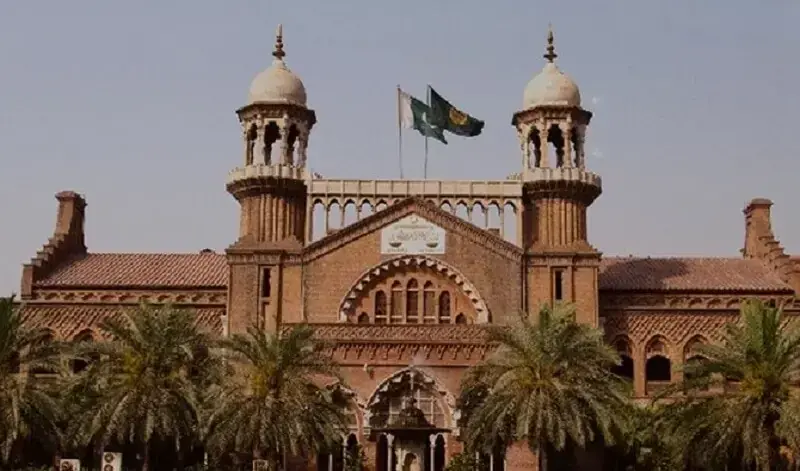
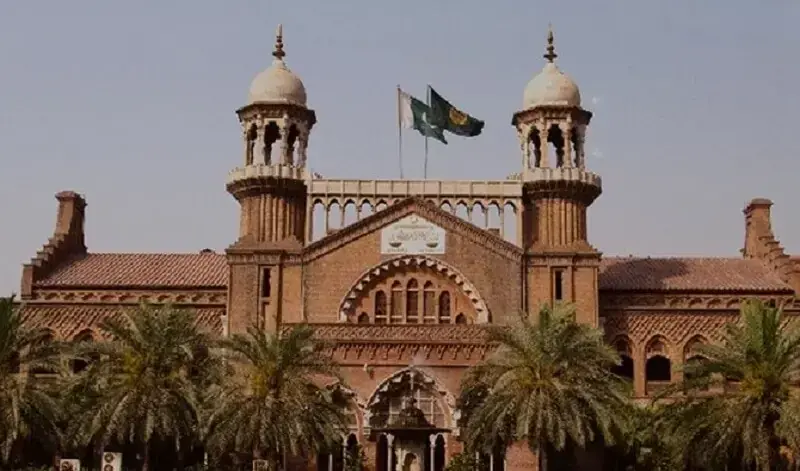
Punjab Assembly lawmakers affiliated with the opposition party PTI filed a petition in the Lahore High Court on Tuesday, seeking the declaration of several provisions related to the recently promulgated Punjab Local Government Act (PLGA) 2025 as ultra vires to the Constitution.
Punjab Assembly Opposition Leader Muhammad Moeenuddin Riaz, Hafiz Farhat Abbas and Ali Imtiaz filed the petition against the legislation that was bulldozed through the assembly last month amid the opposition’s protest. The Punjab government has been named as a respondent in the plea, and Justice Sultan Tanvir will hear this petition, according to lawyer Abuzar Salman Niazi.
The petition, a copy of which is available with Dawn, says that Sections 15, 32, 25, 40, 55, 56 and 57 of the Act are “unconstitutional, unreasonable [and] illegitimate”. These provisions “brazenly and patently contravene” Articles 8 (laws inconsistent with or in derogation of fundamental rights
to be void), 9 (security of person), 17 (freedom of association), 32 (promotion of local government institutions) and 140-A (local government) of the Constitution, the petition further states.
The petitioners contend that “a careful reading of the PLGA, 2025, makes it crystal clear that the same is a restrictive law aimed at curtailing and limiting the powers of elected representatives of the local governments”.
“Furthermore, it also undermines the genuine political process as it limits political choices of the voters. It mandates elections on non-party basis, which [is] tantamount to violating the most basic political freedoms enunciated in the Constitution,” the petition reads.
It says, “This newly elected law, which effectively introduced the systematic elimination of political choice, threatens the ideals of democracy, freedom, equality, tolerance and social justice as enunciated by Islam”.
Moreover, the law also “violates the freedom of association and the right to life and dignity”, the petition says, adding, “Such a legal arrangement disenfranchises the people by censoring the spectrum of their choice. This will lead people to feel alienated and marginalised.”
The petitioners have moved the court to declare Sections 15, 32, 25, 40, 55, 56 and 57 of the Act “ultra vires to the Constitution in terms of Article 8 […], being inconsistent with and in derogation of fundamental rights provided under Article 9 and 17 and also in direct conflict with Article 140-A of the Constitution”.
The petitioners have also requested the court to suspend the operation of the above-mentioned sections of the PLGA, 2025, during the pendency of the plea.
Legislation and election
The legislation was bulldozed through the Punjab Assembly on October 13, following the Election Commission of Pakistan’s strong intervention and announcement that much-delayed local government elections in the province would be held under the PLGA 2022 in the last week of December.
The ECP had rejected all excuses of the Punjab government in finalising and enacting the new PLGA and launched its delimitation process in the province from October 9.
The ECP order, however, was reversed on Oct 21 in light of the new legislation after a request by the Punjab government, which was given more time to finalise the delimitation and demarcation rules. Later, the ECP said local government elections in Punjab would not be possible before the second quarter of next year, as it would not have all the prerequisites to hold the electoral exercise during the current year.
PTI’s objections
The treasury had steamrolled the PLGA bill through the Punjab Assembly amid strong protests and disruptions by the opposition.
Subsequently, the PTI announced on November 2 that the legislation would be challenged in the LHC.
PTI leaders have expressed strong reservations about the non-party-based, one-vote, multi-member union council model, saying that the non-party system would weaken the role of political parties and place administrative officers in control rather than elected local representatives, undermining local government powers.
They say the centralisation of financial powers goes against the spirit of local autonomy, while the authority to appoint administrators for an indefinite period is unconstitutional.
They have demanded the restoration of direct elections for union council chairmen, the establishment of a fixed five-year tenure and a clear election schedule for local governments and strict restrictions on executive interference and administrators’ powers.



