
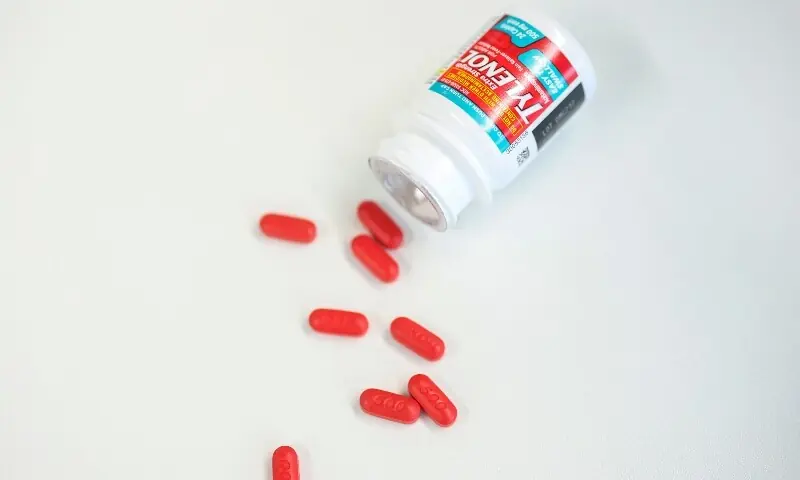
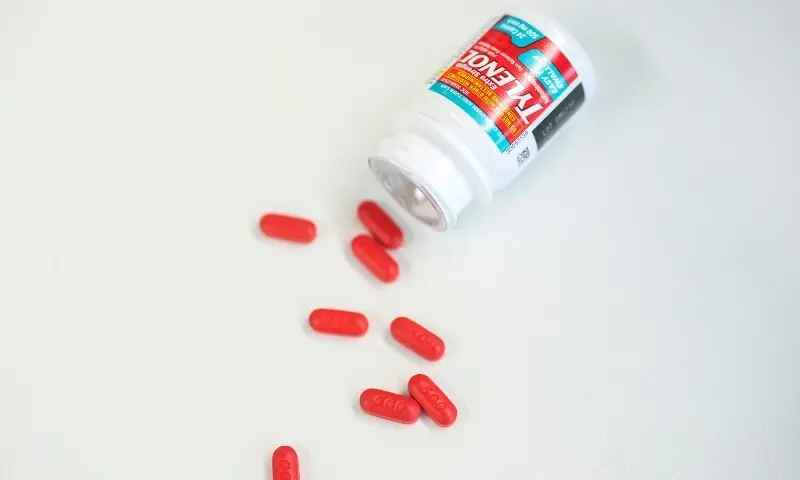
US President Donald Trump on Monday linked autism to childhood vaccine use and the taking of popular pain medication Tylenol by women when pregnant, elevating claims not backed by scientific evidence to the forefront of US health policy.
In an extraordinary news conference at the White House, the Republican president delivered medical advice to pregnant women and parents of young children, repeatedly telling them not to use or administer the painkiller and suggesting that common vaccines not be taken together or so early in a child’s life.
The advice from Trump, who acknowledged he is not a doctor, goes against that of medical societies, which cite data from numerous studies showing that acetaminophen, the active ingredient in Tylenol, plays a safe role in the well-being of pregnant women.
“I want to say it like it is, don’t take Tylenol. Don’t take it,” Trump said.
“Other things that we recommend, or certainly I do anyway, is … don’t let them pump your baby up with the largest pile of stuff you’ve ever seen in your life,” he said, referring to vaccines.
Trump administration backs leucovorin as treatment
Trump’s team suggested leucovorin, a form of folic acid, as a treatment for autism symptoms.
Dozens of medical, research, and autism advocacy groups, including the American Academy of Paediatrics and the American College of Obstetricians and Gynaecologists, decried the president’s announcement.
“The data cited do not support the claim that Tylenol causes autism and leucovorin is a cure, and only stoke fear and falsely suggest hope when there is no simple answer,” the Coalition of Autism Scientists said in a statement.
Standing with Health Secretary Robert F. Kennedy Jr., a vaccine critic who has argued that no vaccine is safe, Trump called for a reexamination of a link between vaccines and autism, a theory that has been repeatedly debunked.
“We believe independent, sound science clearly shows that taking acetaminophen does not cause autism. We strongly disagree with any suggestion otherwise and are deeply concerned with the health risk this poses for expecting mothers and parents,” Kenvue, the maker of Tylenol, said in a statement.
Kenvue shares recover in late day trading
Shares of consumer health company Kenvue recovered five per cent in extended trading after slumping more than 7pc in Monday’s trading session.
The stock remains down about 14pc since September 5, when the Wall Street Journal reported that Kennedy planned to link acetaminophen to autism. Kenvue was spun off from Johnson & Johnson in 2023.
Trump said he is a big believer in vaccines, having led in his first-term the pandemic initiative to speed Covid-19 vaccine development. Still, he called for the removal of mercury from vaccines and said children should not get the hepatitis B vaccine before the age of 12. It is normally given in the first 24 hours after birth. He also said the measles-mumps-rubella combination vaccine should be split into three separate shots.
The Tylenol-autism link announcement was reminiscent of Trump’s regular press briefings in the early months of the pandemic, when he would frequently dispense advice that was not founded on science, including his suggestion that people ingest bleach, which his supporters later said was not serious.
Studies have shown that vaccines are safe, eradicating childhood diseases such as polio and measles in the US. Over the last 50 years, it is estimated that essential vaccines have saved at least 154 million lives, Unicef USA President & CEO Michael J. Nyenhuis has said.
Only one in four Americans believes recent recommendations for fewer vaccines from the Trump administration were based on scientific evidence and facts, a Reuters/Ipsos poll showed this month.
“I cannot say that I’ve ever experienced anything like this in vaccines,” said Dr Norman Baylor, former director of the FDA’s Office of Vaccines Research and Review.
Trump administration announces steps it will take
The Trump administration has asked drug companies to be prepared to ramp up production of leucovorin as a treatment for some autism patients, Food and Drug Administration chief Marty Makary told reporters.
The FDA approved a version of the drug made by GSK, aimed at treating a condition associated with autism, but which the drugmaker no longer manufactures. Once it is established for use, the administration said Medicaid insurance for low-income people would cover the drug for autism symptoms.
The FDA, in its approval process, cited a review of the use of leucovorin in 40 patients with a rare metabolic disorder called cerebral folate deficiency that can lead to a range of neurological symptoms, some of which are seen in people with autism.
The FDA said it would seek a label change for over-the-counter Tylenol and its generic versions to reflect evidence suggesting that use during pregnancy may be associated with an increased risk of neurological conditions such as autism and ADHD in children. The FDA also sent a letter to doctors with a similar warning, but said a causal relationship had not been established.
Researchers say there is no causal link
Researchers say there is no firm evidence of a link between the use of Tylenol and autism. A 2024 study of nearly 2.5 million children in Sweden found no causal link between in utero exposure to acetaminophen and neurodevelopmental disorders.
A 2025 review of 46 earlier studies did suggest a link between prenatal acetaminophen exposure and increased risks of these conditions, but the researchers from the Icahn School of Medicine at Mount Sinai, Harvard University and others said the study does not prove the drug caused the outcomes.
They advised that pregnant women should continue to use acetaminophen as needed, at the lowest possible dose and for the shortest possible period. Trump officials cited that review and used similar language in advising how much Tylenol to take.
“It is clear that the Tylenol-autism link is not a new question — it has been looked at many times and in many different studies,” autism researcher Dr Diana Schendel of the A J Drexel Autism Institute said in a statement, noting that she would like to see what new evidence the administration comes up with.
“Without showing any evidence to back them up, the announcements become reckless and potentially harmful.” Researchers say leucovorin, used to treat some cancer patients on chemotherapy, has shown some promise in very small trials, but that large, randomised trials are still needed.
“There’s not good evidence that it works. There are some studies, but they’re small and they’re not the best studies. And so it’s certainly not something I’m actively recommending,” said Dr Audrey Brumback, an autism expert and researcher at the University of Texas at Austin.

