
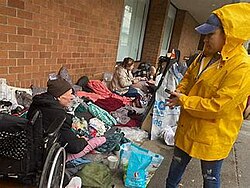
== Chronic Homelessness ==
== Chronic Homelessness ==
Chronic homelessness is an issue that has been in New York City since the late 20th century, together with changes in housing policy, deinstitutionalization, and decreasing access to affordable housing. Beginning in the 1980s and 1990s, researchers and policymakers saw that many citizens and families did not experience homelessness only as once in a lifetime occurrence but instead they experienced repetition or long periods of staying in shelters. Early research done by Shinn et al. (1998) <ref>{{Cite journal |last=Shinn |first=M. |last2=Weitzman |first2=B. C. |last3=Stojanovic |first3=D. |last4=Knickman |first4=J. R. |last5=Jiménez |first5=L. |last6=Duchon |first6=L. |last7=James |first7=S. |last8=Krantz |first8=D. H. |date=1998-11 |title=Predictors of homelessness among families in New York City: from shelter request to housing stability |url=https://pubmed.ncbi.nlm.nih.gov/9807531 |journal=American Journal of Public Health |volume=88 |issue=11 |pages=1651–1657 |doi=10.2105/ajph.88.11.1651 |issn=0090-0036 |pmc=1508577 |pmid=9807531}}</ref>went into depth about how structural factors such as limited housing availability, low income, and prior shelter use made it more likely that families would experience housing instability repeatedly after entering the shelter system. As a result of patterns, the policy of homelessness began to create a difference between chronic homelessness from short-term homelessness in an attempt to understand long-term shelter reliance better.
Chronic homelessness is an issue that has been in New York City since the late 20th century, together with changes in housing policy, deinstitutionalization, and decreasing access to affordable housing. Beginning in the 1980s and 1990s, researchers and policymakers saw that many citizens and families did not experience homelessness only as once in a lifetime occurrence but instead they experienced repetition or long periods of staying in shelters. Early research done by Shinn<ref>{{Cite journal |last=Shinn |first=M. |last2=Weitzman |first2=B. C. |last3=Stojanovic |first3=D. |last4=Knickman |first4=J. R. |last5=Jiménez |first5=L. |last6=Duchon |first6=L. |last7=James |first7=S. |last8=Krantz |first8=D. H. |date=1998-11 |title=Predictors of homelessness among families in New York City: from shelter request to housing stability |url=https://pubmed.ncbi.nlm.nih.gov/9807531 |journal=American Journal of Public Health |volume=88 |issue=11 |pages=1651–1657 |doi=10.2105/ajph.88.11.1651 |issn=0090-0036 |pmc=1508577 |pmid=9807531}}</ref>went into depth about how structural factors such as limited housing availability, low income, and prior shelter use made it more likely that families would experience housing instability repeatedly after entering the shelter system. As a result of patterns, the policy of homelessness began to create a difference between chronic homelessness from short-term homelessness in an attempt to understand long-term shelter reliance better.
The U.S. Department of Housing and Urban Development later formalized the differentiation of the two by defining chronic homelessness as homeless individuals that lasts at least one year or that involves repeated episodes over several years, that is often combined with a disability. This definition shows the growing recognition that homelessness can be a cycle and not just a temporary problem, especially in large urban shelter systems like the ones in NYC.
The U.S. Department of Housing and Urban Development later formalized the differentiation of the two by defining chronic homelessness as homeless individuals that lasts at least one year or that involves repeated episodes over several years, that is often combined with a disability. This definition shows the growing recognition that homelessness can be a cycle and not just a temporary problem, especially in large urban shelter systems like the ones in NYC.

Chronic Homelessness
[edit]
Chronic homelessness is an issue that has been in New York City since the late 20th century, together with changes in housing policy, deinstitutionalization, and decreasing access to affordable housing. Beginning in the 1980s and 1990s, researchers and policymakers saw that many citizens and families did not experience homelessness only as once in a lifetime occurrence but instead they experienced repetition or long periods of staying in shelters. Early research done by Shinn[1] went into depth about how structural factors such as limited housing availability, low income, and prior shelter use made it more likely that families would experience housing instability repeatedly after entering the shelter system. As a result of patterns, the policy of homelessness began to create a difference between chronic homelessness from short-term homelessness in an attempt to understand long-term shelter reliance better.
The U.S. Department of Housing and Urban Development later formalized the differentiation of the two by defining chronic homelessness as homeless individuals that lasts at least one year or that involves repeated episodes over several years, that is often combined with a disability. This definition shows the growing recognition that homelessness can be a cycle and not just a temporary problem, especially in large urban shelter systems like the ones in NYC.
Chronic Homelessness and the Shelter System
[edit]
In New York City people that experience chronic homelessness often repeatedly go through civil shelter systems rather than achieving long-term housing stability. Research has shown that past usage of shelters is a strong predictor of future shelter use as well, which really causes patterns of repeated homelessness.[2][3] Farrell reassesses risk measures for homelessness among families with children in New York City and finds that families who have used shelters in the past likely face a higher risk of returning to them, shedding more light on how homelessness frequently occurs in recurring episodes rather than as a single event.
More recent analysis of the patterns of the recurring use of shelters supports this understanding of homelessness as being a cycle. A study of the Win Shelter Network found that a good number of families who left shelters returned later, with many of them going back within a relatively short period of time.[4] This research shows that even after leaving shelters, many families remain vulnerable to housing instability due to repeated structural constraints, including the lack of affordable housing as well as a lack of long-term support. Overall, this research shows how chronic homelessness in New York City is closely related to the repeated use of shelters and public systems.[5]
Scholarly Critiques of Chronic Homelessness
[edit]
Some scholars question how chronic homelessness is defined and managed within shelter-based systems.[6] critiques the idea of chronic homelessness and argues that it can make certain people seem like they are permanently homeless and take their attention away from larger structural causes such as housing markets and economic inequality. Instead of focusing just on shelter use and service utilization, Willse argues within his text that the category of chronic homelessness shows political and administrative decisions about how homelessness is being handled. In New York City, this idea can go specifically hand in hand with research that shows the repeated use of shelters over time, bringing up questions on whether or not existing systems reasonably and effectively help put a stop to the cycle of homelessness or instead cause it to continue.[7]
As a result, chronic homelessness continues to serve as a major challenge for NYC’s response system to homelessness. Research has regularly indicated that people and families who have prior use of shelter usually have an increased risk of returning to these shelters, reinforcing the idea of the pattern of homelessness being a cycle. This research highlights the struggle of reducing long-term shelter use and emphasizes ongoing debates about how homelessness is addressed within large urban systems.
- ^ Shinn, M.; Weitzman, B. C.; Stojanovic, D.; Knickman, J. R.; Jiménez, L.; Duchon, L.; James, S.; Krantz, D. H. (1998-11). “Predictors of homelessness among families in New York City: from shelter request to housing stability”. American Journal of Public Health. 88 (11): 1651–1657. doi:10.2105/ajph.88.11.1651. ISSN 0090-0036. PMC 1508577. PMID 9807531.
- ^ Shinn, M.; Weitzman, B. C.; Stojanovic, D.; Knickman, J. R.; Jiménez, L.; Duchon, L.; James, S.; Krantz, D. H. (1998-11). “Predictors of homelessness among families in New York City: from shelter request to housing stability”. American Journal of Public Health. 88 (11): 1651–1657. doi:10.2105/ajph.88.11.1651. ISSN 0090-0036. PMC 1508577. PMID 9807531.
- ^ Farrell, Daniel C.; Kuerbis, Alexis; Parulkar, Ashwin; Preda, Matthew; Toledo-Liz, Marisol; Fuller, Renee (2023-06-01). “Reassessing measures of risk for homelessness among families with children in New York City”. Cities. 137: 104319. doi:10.1016/j.cities.2023.104319. ISSN 0264-2751.
{{cite journal}}: CS1 maint: article number as page number (link) - ^ Kontokosta, Constantine; Hong, Boyeong; Malik, Awais; Bellach, Ira M.; Huang, Xueqi; Korsberg, Kristi; Perl, Dara; Somvanshi, Avikal (2017-10-18), Predictors of Re-admission for Homeless Families in New York City: The Case of the Win Shelter Network, arXiv, doi:10.48550/arXiv.1710.06905, arXiv:1710.06905, retrieved 2025-12-19
- ^ González Álvarez, Rodrigo; Hofman, Sterre; ten Brummelaar, Mijntje; López López, Mónica (2023-07-01). “Care professionals’ perspectives and roles on resilience among LGBTQIA+ youth in out-of-home care: A multidimensional perspective”. Children and Youth Services Review. 150: 107012. doi:10.1016/j.childyouth.2023.107012. ISSN 0190-7409.
{{cite journal}}: CS1 maint: article number as page number (link) - ^ Lim, Sungwoo; Gao, Qi; Stazesky, Elsa; Singh, Tejinder P.; Harris, Tiffany G.; Levanon Seligson, Amber (2018-01-10). “Impact of a New York City supportive housing program on Medicaid expenditure patterns among people with serious mental illness and chronic homelessness”. BMC Health Services Research. 18 (1): 15. doi:10.1186/s12913-017-2816-9. ISSN 1472-6963. PMC 5761184. PMID 29316920.
{{cite journal}}: CS1 maint: unflagged free DOI (link) - ^ Willse, Craig. The value of homelessness: Managing surplus.
Housing Affordability
[edit]
Housing Affordability is how difficult or easy it is for individuals to pay for rent, housing, or mortgage without placing too much pressure on the individual’s overall budget. Housing affordability in New York City varies by the neighborhood but it still is a widespread of challenge to a lot of individuals. Low-income and the working-class areas, especially in the Bronx, Northern Manhattan, and parts of Brooklyn and Queens, faces massive pressure from rising rents and a limited housing supply. [1][2] Even most of the neighborhoods traditionally considered more affordable struggle to provide a more stable housing for the citizens. One of the main causes of homelessness is the lack of affordable and accessible housing. According to the Coalition for the homeless, they claim that the city’s primary causes of homelessness are excessive rents and a lack of affordable housing.[3] According to a 2025 report by the New York State Comptroller, homelessness in New York State more than quadrupled between 2022 and 2024, with the majority of the increase that occurs in New York City.[4]Rent control, subsidized development, and public housing initiatives that started in the 1930s are example of a government response.[5] Despite all of the efforts, the development of affordable housing is still limited by structural issues including high building prices and a lack of available land. [6][7]
Shelter System and Mortality rate
[edit]
A fascinating long-term study tracked more than 160,000 people who entered shelter system, run by the NYC Department of homelessness Services(DHS) between 1990-2002. Researchers followed these individuals up until 2008 to understand what happened to them overtime, and the findings are surprising. People who exited these shelters with stable housing had less mortality rates than those who exited without support on stable housing. In other words, stable housing isn’t just about comfort, but about live-saving. Interestingly, the data suggests that staying in the shelter system can reduce the chances of mortality. However, it is not always a protective factor because those who stay in shelter systems also have a high mortality rate due to bad health long-term homelessness imposed.
Mortality rates differ between single adult homeless and adults who are homeless with families. It suggests that Family plays a major role in survival outcomes. Overall, housing stability impacts health.[8]
- ^ “Basic Facts About Homelessness: New York City – Coalition For The Homeless”. www.coalitionforthehomeless.org. Retrieved 2025-12-19.
- ^ Institute, Mexican; Abdul, Hashim (2024-01-01). “The Affordable Housing Crisis in New York City”. Publications and Research.
- ^ “Basic Facts About Homelessness: New York City – Coalition For The Homeless”. www.coalitionforthehomeless.org. Retrieved 2025-12-19.
- ^ “DiNapoli: Numbers of Homeless Population Doubled in New York | Office of the New York State Comptroller”. www.osc.ny.gov. 2025-01-22. Retrieved 2025-12-19.
- ^ Paletta, Anthony. “A Brief History of Affordable Housing in New York City”. Metropolis. Retrieved 2025-12-19.
- ^ Paletta, Anthony. “A Brief History of Affordable Housing in New York City”. Metropolis. Retrieved 2025-12-19.
- ^ Institute, Mexican; Abdul, Hashim (2024-01-01). “The Affordable Housing Crisis in New York City”. Publications and Research.
- ^ Metraux, Stephen; Eng, Nicholas; Bainbridge, Jay; Culhane, Dennis P. (2011-12). “The impact of shelter use and housing placement on mortality hazard for unaccompanied adults and adults in family households entering New York City shelters: 1990-2002”. Journal of Urban Health: Bulletin of the New York Academy of Medicine. 88 (6): 1091–1104. doi:10.1007/s11524-011-9602-5. ISSN 1468-2869. PMC 3232418. PMID 21809153.

