
Under [[Ottoman Empire|Ottoman]] rule, the Yowakim family name appears frequently in local administrative and church records. In Ottoman Palestine, the family was noted as a long-established Christian household with administrative responsibilities. In [[Ein Karem]], traditionally regarded as the birthplace of John the Baptist, the Wakim family was among the recognized Christian families by the sixteenth century. A nineteenth-century report references a “Dr. Wakim’s clinic” in the same village.<ref>Ron Shaham, “Christian and Jewish Waqf in Palestine during the Late Ottoman Period,” ”Bulletin of the School of Oriental and African Studies” 54, no. 3 (1991).</ref>
Under [[Ottoman Empire|Ottoman]] rule, the Yowakim family name appears frequently in local administrative and church records. In Ottoman Palestine, the family was noted as a long-established Christian household with administrative responsibilities. In [[Ein Karem]], traditionally regarded as the birthplace of John the Baptist, the Wakim family was among the recognized Christian families by the sixteenth century. A nineteenth-century report references a “Dr. Wakim’s clinic” in the same village.<ref>Ron Shaham, “Christian and Jewish Waqf in Palestine during the Late Ottoman Period,” ”Bulletin of the School of Oriental and African Studies” 54, no. 3 (1991).</ref>
In [[Galilee]], oral histories mention the [[Wakim]]s in villages like [[Iqrit]] and [[Kafr Bir’im|Biram]] (which were entirely Christian), with migration or expansion northward during this time. Meanwhile, in [[Lebanon]], Maronite patriarchal records and local histories begin to list the Wakim (Youakim) family among notable clans. They are found in [[El Mina, Lebanon|El-Mina]] ([[Tripoli, Lebanon|Tripoli]]) and [[Bsharri]] in the north, and in [[Jezzine]] and surrounding villages in the south . These locales correspond to Maronite heartlands (Bsharri) and mixed Maronite/Orthodox areas (Tripoli, Jezzine). Some branches likely migrated from [[Hauran]] (southern [[Syria]]) to Mount Lebanon in the eighteenth century, integrating into the Maronite community. By the late 1800s, the Yowakim’s in Lebanon were landowners, farmers, and clergymen. They built churches (some old Maronite churches in Jezzine list family donors named [[Wakim]]) and participated in local governance under Ottoman feudal lords. <ref>ʿĪsā Iskandar al-Maʿlūf, ”Tārīkh al-Usar al-Sharqiyya” (entries on Tripoli, Bsharri, Jezzine families).</ref>
In [[Galilee]], oral histories mention the [[Wakim]]s in villages like [[Iqrit]] and [[Kafr Bir’im|Biram]] (which were entirely Christian), with migration or expansion northward during this time. Meanwhile, in [[Lebanon]], Maronite patriarchal records and local histories begin to list the Wakim (Youakim) family among notable clans. They are found in [[El Mina, Lebanon|El-Mina]] ([[Tripoli, Lebanon|Tripoli]]) and [[Bsharri]] in the north, and in [[Jezzine]] and surrounding villages in the south . These locales correspond to Maronite heartlands (Bsharri) and mixed Maronite/Orthodox areas (Tripoli, Jezzine). Some branches likely migrated from [[Hauran]] (southern [[Syria]]) to Mount Lebanon in the eighteenth century, integrating into the Maronite community. By the late 1800s, the Yowakim’s in Lebanon were landowners and clergymen. They built churches and participated in local governance under Ottoman feudal lords. <ref>ʿĪsā Iskandar al-Maʿlūf, ”Tārīkh al-Usar al-Sharqiyya” (entries on Tripoli, Bsharri, Jezzine families).</ref>
The tumultuous 20th century greatly affected the family’s distribution. In [[Palestine (region)|Palestine]], members of the Wakim family were still concentrated in the [[Jerusalem]] area and in coastal cities. One notable example is Victor Wakim§’s family from [[Ein Karem]]: they remained in Palestine through [[World War II]]. After [[1948 Palestinian expulsion and flight|1948]], when Ein Karem’s Christian populace fled the war, Victor’s father relocated the family to the village of [[Al-Qubeiba, Jerusalem|Al-Qubeiba]] (northwest of Jerusalem) . They became known as the last Christian family in that village in later years, stubbornly maintaining a presence while others emigrated. <ref name=”auto12″/><ref name=”auto7″/> In [[Lebanon]], many Yowakim’s gravitated to [[Beirut]] as it became the hub of commerce and education. They engaged in business, law, and politics. For example, [[Najah Wakim]], born 1946 to a [[Wakim]] family in coastal Lebanon, rose to prominence as a politician – he served as a [[Member of Parliament (Lebanon)|Member of Parliament]] (1972–2000) and founded the leftist [[People’s Movement (Lebanon)|People’s Movement]]. <ref name=”auto3″/><ref name=”auto6″>https://www.chathamhouse.org/sites/default/files/2021-06/2021-06-29-breaking-curse-corruption-lebanon-merhej.pdf</ref> Other Lebanese [[Wakim]]s served in government administration or the [[Maronite Church|church]]. An early 20th-c. figure, Father Francis [[Wakim]], was an abbot in the [[Antonin Maronite Order|Antonine Maronite Order]], heading a monastery in the [[Matn District|Metn]] region . His brother [[Edmond Wakim]] held a civil service post in the Finance Department in Ottoman/ French-mandate era Lebanon . This period also saw emigration: branches of the family moved abroad seeking opportunity. [[Bishara Wakim]], for instance, took his family from [[Lebanon]] to [[Egypt]] early in the century; he himself became a famed actor and film director in Cairo’s golden age of cinema . <ref name=”auto8″>{{Cite web|url=https://elcinema.com/en/person/1101311|title=Nadine Khan – Director Filmography، photos، Video|website=elCinema.com}}</ref> In the [[United States]], [[Elias Wakim]] (born in Lebanon) established himself as a respected community leader. He was so influential in Lebanese–American affairs that he became friends with U.S. President [[Franklin D. Roosevelt]], and one of his daughters would later serve in the U.S. State Department . These diaspora pioneers kept alive the story of their noble origins, often forming “Syrian/Lebanese Christian” clubs and writing down family trees. Notably, an emigrant branch compiled a [[Wakim]] family genealogy book for the village of [[Lebaa]], Lebanon, ensuring that even abroad, younger generations knew their roots. <ref name=”auto9″/>
The tumultuous 20th century greatly affected the family’s distribution. In [[Palestine (region)|Palestine]], members of the Wakim family were still concentrated in the [[Jerusalem]] area and in coastal cities. One notable example is Victor Wakim§’s family from [[Ein Karem]]: they remained in Palestine through [[World War II]]. After [[1948 Palestinian expulsion and flight|1948]], when Ein Karem’s Christian populace fled the war, Victor’s father relocated the family to the village of [[Al-Qubeiba, Jerusalem|Al-Qubeiba]] (northwest of Jerusalem) . They became known as the last Christian family in that village in later years, stubbornly maintaining a presence while others emigrated. <ref name=”auto12″/><ref name=”auto7″/> In [[Lebanon]], many Yowakim’s gravitated to [[Beirut]] as it became the hub of commerce and education. They engaged in business, law, and politics. For example, [[Najah Wakim]], born 1946 to a [[Wakim]] family in coastal Lebanon, rose to prominence as a politician – he served as a [[Member of Parliament (Lebanon)|Member of Parliament]] (1972–2000) and founded the leftist [[People’s Movement (Lebanon)|People’s Movement]]. <ref name=”auto3″/><ref name=”auto6″>https://www.chathamhouse.org/sites/default/files/2021-06/2021-06-29-breaking-curse-corruption-lebanon-merhej.pdf</ref> Other Lebanese [[Wakim]]s served in government administration or the [[Maronite Church|church]]. An early 20th-c. figure, Father Francis [[Wakim]], was an abbot in the [[Antonin Maronite Order|Antonine Maronite Order]], heading a monastery in the [[Matn District|Metn]] region . His brother [[Edmond Wakim]] held a civil service post in the Finance Department in Ottoman/ French-mandate era Lebanon . This period also saw emigration: branches of the family moved abroad seeking opportunity. [[Bishara Wakim]], for instance, took his family from [[Lebanon]] to [[Egypt]] early in the century; he himself became a famed actor and film director in Cairo’s golden age of cinema . <ref name=”auto8″>{{Cite web|url=https://elcinema.com/en/person/1101311|title=Nadine Khan – Director Filmography، photos، Video|website=elCinema.com}}</ref> In the [[United States]], [[Elias Wakim]] (born in Lebanon) established himself as a respected community leader. He was so influential in Lebanese–American affairs that he became friends with U.S. President [[Franklin D. Roosevelt]], and one of his daughters would later serve in the U.S. State Department . These diaspora pioneers kept alive the story of their noble origins, often forming “Syrian/Lebanese Christian” clubs and writing down family trees. Notably, an emigrant branch compiled a [[Wakim]] family genealogy book for the village of [[Lebaa]], Lebanon, ensuring that even abroad, younger generations knew their roots. <ref name=”auto9″/>
Levantine Christian family
The Yowakim family (also spelled Wakim or Youakim) is a Levantine Christian family historically rooted in lower Galilee, modern day Lebanon and Palestine/Israel, with branches documented in Mount Lebanon and the Beqaa Valley (notably Zahlé) and in the Jerusalem area.
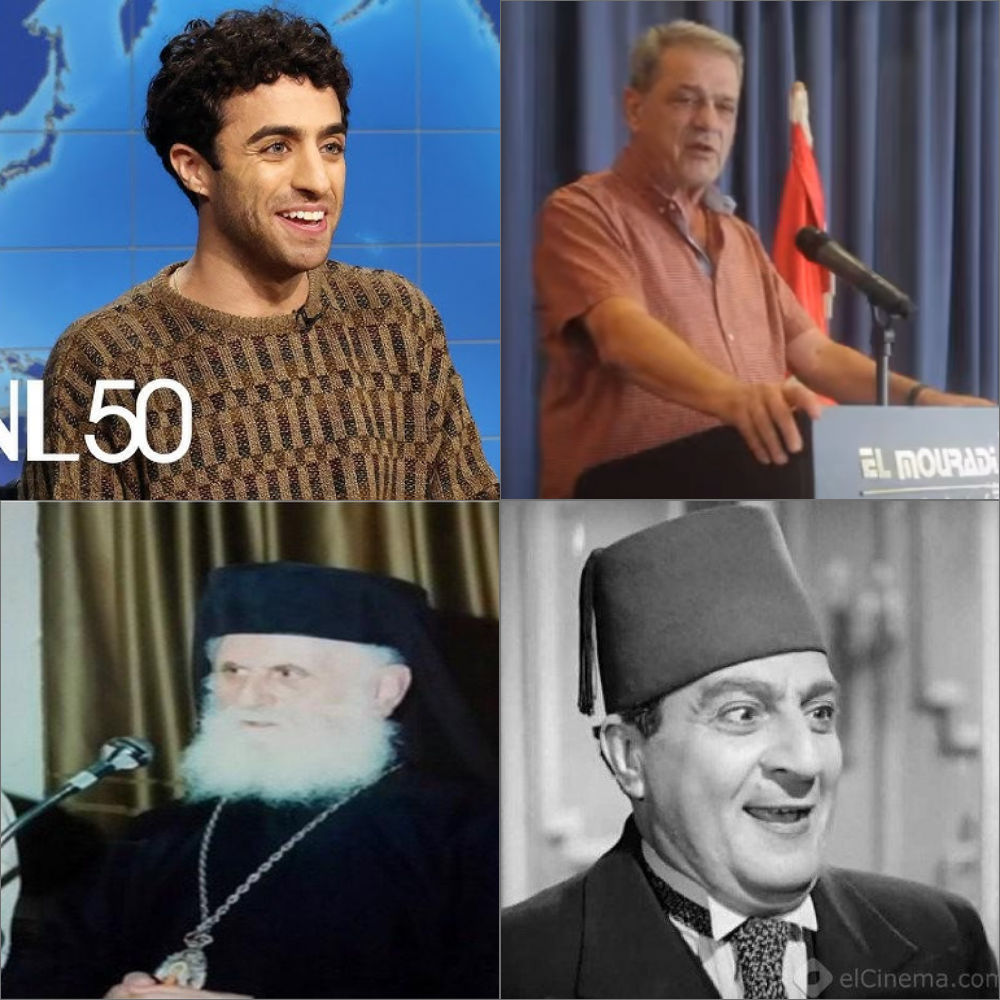
Members of the family have held notable positions in church leadership and in public life over the centuries, including Eftimios Youakim, Archbishop of the Melkite Greek Catholic Archeparchy of Zahle and Forzol (1926–1971),[5][6] and Saba Youakim, Archbishop of Archeparchy of Petra and Philadelphia in Amman (1968–1992).[7][8] In politics, Najah Wakim served as a Lebanese Member of Parliament (1972–2000) and later founded the People’s Movement, remaining a notable public figure.[9][10][11] In the Holy Land, members of the family are recorded in Emmaus al-Qubeibeh near Jerusalem;[12] in recent years, a Wakim household has been described as the village’s only remaining Christian family.[13]
The family’s origins are relatively well-documented, with Maronite and Greek Orthodox records tracing their lineage to as early as the period following the Islamic conquest of the Levant.[14][15] The name itself believed to derive from the Hebrew Yehoyaqim (rendered as Joachim in Christian tradition), meaning “raised” or “established by God.”[16]In hagiographical and apocryphal traditions—particularly the Protoevangelium of James—Saint Joachim and Saint Anne are venerated as the parents of the Virgin Mary, with Saint Joachim regarded as the ancestral patriarch associated with the family.[17][18][19][20]
For centuries, the family has traditionally been associated with the Desposyni, the early Judeo-Christian families regarded as relatives of Jesus.[21][22]
The earliest documented ancestors of the Yowakim family were part of the Jewish Christian community around Jerusalem, Nazareth, and Antioch [23][24] Both genealogical accounts and church records link them to the earliest Christians – whether as blood relatives of Jesus’s family or as members of the first Jewish-Christian congregations. [21][22]
The first mention of the family lineage emerging from Jesus’ relatives or apostles was recorded by church historians. Eusebius of Caesarea (4th century) wrote that the grandchildren of Jude (described as a “brother” or kin of Jesus) were known to the authorities of the Roman Empire to reside in Galilee. Such “relatives of the Lord” purportedly became leaders in the early Church of Jerusalem. [21]
It was not uncommon for early Christian clans in the Levant to keep records of their genealogy and claim decent from the earliest saints. Scholarly surveys of Levantine Christian lineages note that certain families with biblical surnames – for example, Youhanna (John), Hanania (Ananias), Sahyoun (Zion), Chamoun (Simon) – are traditionally viewed as descendants of the original Jewish disciples of Christ. [25]
In this era, family members were Aramaic-speaking Judaean Christians. Despite upheavals (Persian and Arab conquests, Crusades), the Yowakim family remained in the Levant. In Palestine, they were among Aramaic-speaking Melkite (Eastern Orthodox) Christians under Muslim rule. [26]
By medieval times the family was known to be settled in villages around Jerusalem. Some historians believe that certain Christian clans in this period intentionally maintained endogamous marriages to preserve their “sacred lineage”. Some branches of the Yowakim family escaped Jerusalem into Mount Lebanon for safety and autonomy during the Crusade persecutions. Preserved writings suggest that in the Middle Ages, Maronite Yowakims were present in the mountains, preserving manuscripts of their genealogy, though only two documents from this era still remain intact. [27]
Under Ottoman rule, the Yowakim family name appears frequently in local administrative and church records. In Ottoman Palestine, the family was noted as a long-established Christian household with administrative responsibilities. In Ein Karem, traditionally regarded as the birthplace of John the Baptist, the Wakim family was among the recognized Christian families by the sixteenth century. A nineteenth-century report references a “Dr. Wakim’s clinic” in the same village.[28]
In Galilee, oral histories mention the Wakims in villages like Iqrit and Biram (which were entirely Christian), with migration or expansion northward during this time. Meanwhile, in Lebanon, Maronite patriarchal records and local histories begin to list the Wakim (Youakim) family among notable clans. They are found in El-Mina (Tripoli) and Bsharri in the north, and in Jezzine and surrounding villages in the south . These locales correspond to Maronite heartlands (Bsharri) and mixed Maronite/Orthodox areas (Tripoli, Jezzine). Some branches likely migrated from Hauran (southern Syria) to Mount Lebanon in the eighteenth century, integrating into the Maronite community. By the late 1800s, the Yowakim’s in Lebanon were landowners and clergymen. They built churches and participated in local governance under Ottoman feudal lords. [29]
The tumultuous 20th century greatly affected the family’s distribution. In Palestine, members of the Wakim family were still concentrated in the Jerusalem area and in coastal cities. One notable example is Victor Wakim§’s family from Ein Karem: they remained in Palestine through World War II. After 1948, when Ein Karem’s Christian populace fled the war, Victor’s father relocated the family to the village of Al-Qubeiba (northwest of Jerusalem) . They became known as the last Christian family in that village in later years, stubbornly maintaining a presence while others emigrated. [12][13] In Lebanon, many Yowakim’s gravitated to Beirut as it became the hub of commerce and education. They engaged in business, law, and politics. For example, Najah Wakim, born 1946 to a Wakim family in coastal Lebanon, rose to prominence as a politician – he served as a Member of Parliament (1972–2000) and founded the leftist People’s Movement. [9][30] Other Lebanese Wakims served in government administration or the church. An early 20th-c. figure, Father Francis Wakim, was an abbot in the Antonine Maronite Order, heading a monastery in the Metn region . His brother Edmond Wakim held a civil service post in the Finance Department in Ottoman/ French-mandate era Lebanon . This period also saw emigration: branches of the family moved abroad seeking opportunity. Bishara Wakim, for instance, took his family from Lebanon to Egypt early in the century; he himself became a famed actor and film director in Cairo’s golden age of cinema . [31] In the United States, Elias Wakim (born in Lebanon) established himself as a respected community leader. He was so influential in Lebanese–American affairs that he became friends with U.S. President Franklin D. Roosevelt, and one of his daughters would later serve in the U.S. State Department . These diaspora pioneers kept alive the story of their noble origins, often forming “Syrian/Lebanese Christian” clubs and writing down family trees. Notably, an emigrant branch compiled a Wakim family genealogy book for the village of Lebaa, Lebanon, ensuring that even abroad, younger generations knew their roots. [14]
Today the Yowakim/Wakim family remains widely dispersed yet cohesive in identity. In Lebanon, numerous Wakim families live in Beirut and Mount Lebanon, as well as in their ancestral towns (Jezzine, Bsharri, etc.), often still prominent in business and local politics. Najah Wakim continues to be an outspoken public figure in Beirut. In the State of Israel/Palestine, only a handful of Wakim individuals and families remain, due to past displacement. The example of Victor Wakim in Qubeiba stands out – as of 2022, he and his siblings were literally the last Christian family in that West Bank village, though their “big family is now scattered across the world”, as Victor notes . [13] Many Palestinian Wakims became part of the diaspora in Jordan, the Americas, or Australia after 1948, though some resettled in Nazareth and Haifa.
A sense of mission persists among those who stayed: Attorney Wakim Wakim in Israel is a leading advocate for the rights of internally displaced Palestinians (the “Present Absentees”). As secretary of the Committee for the Rights of the Internally Displaced in Israel, he campaigns for the right of return to villages like Iqrit and Biram.
[32]
Notable contributions
[edit]
Throughout its history, the Wakim clan have been active leaders in religious, economic, and political life. Members of the family have included writers, clergy, academics, politicians, entertainers.
Many Yowakims entered the clergy. In addition to local priests over the centuries, the family has produced higher-ranking clerics. In the late 1800s, a certain Bishop Youakim (Wakim) is recorded as a regional Orthodox bishop in Syria.[33] Father Francis Wakim (mentioned earlier) was a well-known Maronite figure in mid-20th century Lebanon. He served as the manager (Abbot) of the Antonine Monastery in the town of Baabda, overseeing monastic lands and educational activities.[14] His leadership in a major Maronite order underscores the esteem the family held in church circles. Also, among the Melkite Greek Catholics, Archimandrite Paul Wakim was said to be a 19th-century monk who traveled between Lebanon and Palestine, tending to scattered Christian flocks.[14]
Local administrators and professionals
[edit]
The Wakims have frequently been noted as physicians, lawyers, and civil servants. In Ottoman times, they often served as the village mukhtar (headman) or as scribes due to their education.[26] As cited above, an early 20th-century Wakim, Edmond Wakim, was the minister of the Finance Department in Baabda (the provincial capital) – effectively part of the governing bureaucracy under the French Mandate.[14]
In Palestine, members of the family were respected landowners and professionals. Even after displacement in 1948, Palestinian Wakims continued in such roles abroad – for instance, some became doctors in Jordan and the Gulf states. The tradition of public service extends to the present: in Israel, Wakim Wakim (b. 1958), beyond his advocacy role, is a practicing lawyer and often provides pro bono legal help to displaced villagers.[32] In Lebanon, numerous Wakims are engineers, educators, and entrepreneurs today.
Political and social leaders
[edit]
The most famous modern figure of the family is Najah Anis Wakim (b. 1946). A Greek Orthodox Christian from a Wakim family in Jbeil District (Mount Lebanon), Najah made a name as a fiery populist politician. He won a seat in the Lebanese Parliament in 1972 at a young age, representing Beirut. A critic of corruption and foreign interference, he remained in Parliament until 2000, at times as a lone opposition voice. In 2000 he founded the People’s Movement (Harakat al-Sha’b), a secular nationalist political party.[9][30][11] Najah Wakim’s prominence in Lebanese politics illustrates how far the influence of this family has reached in modern times – from biblical fishermen and peasants to seasoned parliamentarians.
Another notable politician with Wakim roots is Abdullah Wakim, who served as a deputy (MP) in the Lebanese parliament in the 1960s, representing the Metn region – he was a cousin to Father Francis, blending the family’s political and religious leadership strands.
Bishara Wakim (1890–1949) was a renowned actor and director in Egypt’s early film industry. Born to a Maronite Wakim family that emigrated from Lebanon to Alexandria, Bishara (sometimes credited as Bechara Wakim) became a pioneer of theater and Egyptian cinema [31]
In literature, Renée Yowakim – a 20th-century French-language writer of Lebanese descent – published poems and memoirs reflecting on her ancestral village in Lebanon and the blend of Christian tradition with modern life.
Additionally, the family name appears in scholarly circles: Dr. George Wakim, a contemporary historian in Beirut, has researched and written about Levantine Christian heritage.
Custodians of holy sites
[edit]
The Wakims have often been custodians of certain religious sites. For example, it is locally recounted that for generations a branch of the Wakim family in Al-Qulaylah, Lebanon were the keepers of the Maqam Nabi Imran (St. Joachim’s shrine). They maintained the shrine, welcomed pilgrims – Christian and Muslim – and passed down the stories associated with it.[34] Although today the shrine is managed by Islamic authorities (since it’s also revered in Islam as the tomb of Imran, father of Mary), the memory of the Christian family that watched over it remains.
Similarly, in Jerusalem, the Church of St. Anne (traditionally built over Mary’s parents’ home) were under the care of the Wakim’s with “Yaqub Wakim” among those keyholders in the 19th century.[35]
- Saba Youakim (born 1937), Archbishop of Petra and Philadelphia in Amman
- Emil Wakim (born 1998), Lebanese-American comedian and actor
- Bishara Wakim (1890–1949), Egyptian director and actor
- Chris Wakim, former member of the West Virginia House of Delegates
- Najah Wakim (born 1946), president and one of the founders of the Lebanese leftist group the People’s Movement
- Sam Wakim (born 1937), Canadian lawyer and former Progressive Conservative party member of the Canadian House of Commons
- ^ https://www.ancientfaces.com/surname/wakim-family-history/301133
- ^ Encyclopaedia Britannica, “Jehoiakim.” https://www.britannica.com/biography/Jehoiakim
- ^ University of Iowa, Bible & Archaeology, “Hello, My Name Is: Jehoiakim.” https://bam.sites.uiowa.edu/hello/jehoiakim
- ^ https://www.ancientfaces.com/surname/wakim-family-history/301133
- ^ “Archbishop Eftimios Youakim [Catholic-Hierarchy]”. www.catholic-hierarchy.org.
- ^ “Zahleh e Furzol (Melkite Greek Archeparchy) [Catholic-Hierarchy]”. www.catholic-hierarchy.org.
- ^ “Archbishop Saba Youakim [Catholic-Hierarchy]”. www.catholic-hierarchy.org.
- ^ “Petra e Filadelfia (Melkite Greek Archeparchy) [Catholic-Hierarchy]”. www.catholic-hierarchy.org.
- ^ a b c “Interview – L’ancien député se déchaîne contre la classe politique et réclame – le retrait syrien – Pour Najah Wakim, le dialogue actuel est vicié à la base”. L’Orient-Le Jour. July 25, 2001.
- ^ “Breaking the curse of corruption in Lebanon | 01 Introduction”. www.chathamhouse.org.
- ^ a b https://www.rosalux.de/fileadmin/rls_uploads/pdfs/sonst_publikationen/Mapping_of_Arab_Left-%D9%90English.pdf
- ^ a b “Emmaus – El Qubeibeh – Custodia di Terra Santa”. December 3, 2018.
- ^ a b c نوفل, عزيزة. “كان يزورها 40 ألفا سنويا.. الجزيرة نت بضيافة آخر عائلة مسيحية تحتفل بالميلاد ببلدة القبيبة بالقدس”. الجزيرة نت.
- ^ a b c d e واكيم، واكيم. «جذور آل واكيم وأنسباؤهم من عائلات لبعا» [Roots of the Wakim Family and Their Relatives from the Families of Lebaa], 1st ed., 181 pp.
- ^ ʿĪsā Iskandar al-Maʿlūf, Tārīkh al-Usar al-Sharqiyya [History of Eastern Families], ed. Fawwaz Traboulsi, volume on the Beqaa/Ras Baalbek (entries on the Wakim/Khallaf lines).
- ^ “Jehoiakim | Babylonian Captivity, Prophecies, & Reign | Britannica”. www.britannica.com.
- ^ “Infancy Gospel of James, or Protevangelium (M.R. James translation)”. www.earlychristianwritings.com.
- ^ “CATHOLIC ENCYCLOPEDIA: St. Joachim”. www.newadvent.org.
- ^ “CATHOLIC ENCYCLOPEDIA: St. Anne”. www.newadvent.org.
- ^ “Surah Ali ‘Imran – 35-37”. Quran.com.
- ^ a b c “CHURCH FATHERS: Church History, Book III (Eusebius)”. www.newadvent.org.
- ^ a b “Hegesippus (Roberts-Donaldson translation)”. www.earlychristianwritings.com.
- ^ “مقام النبي عمران في القليلة… وجهة مقدّسة تجمع ما بين المسيحيين والمسلمين”.
- ^ Cite error: The named reference
auto10was invoked but never defined (see the help page). - ^ ʿĪsā Iskandar al-Maʿlūf, Tārīkh al-Usar al-Sharqiyya [History of Eastern Families], ed. Fawwaz Traboulsi, vol. (entries on Wakim/Khallaf lines).
- ^ a b Cite error: The named reference
auto4was invoked but never defined (see the help page). - ^ ʿĪsā Iskandar al-Maʿlūf, Tārīkh al-Usar al-Sharqiyya (entries on Bekaa/Mount Lebanon lineages including Wakim/Khallaf).
- ^ Ron Shaham, “Christian and Jewish Waqf in Palestine during the Late Ottoman Period,” Bulletin of the School of Oriental and African Studies 54, no. 3 (1991).
- ^ ʿĪsā Iskandar al-Maʿlūf, Tārīkh al-Usar al-Sharqiyya (entries on Tripoli, Bsharri, Jezzine families).
- ^ a b https://www.chathamhouse.org/sites/default/files/2021-06/2021-06-29-breaking-curse-corruption-lebanon-merhej.pdf
- ^ a b “Nadine Khan – Director Filmography، photos، Video”. elCinema.com.
- ^ a b “זוכרות”. זוכרות.
- ^ ʿĪsā Iskandar al-Maʿlūf, Tārīkh al-Usar al-Sharqiyya [History of Eastern Families], ed. Fawwaz Traboulsi (entries relating to Wakim/Khallaf lines).
- ^ Cite error: The named reference
auto2was invoked but never defined (see the help page). - ^ https://www.custodia.org/en/sanctuaries/saint-anne

