
[[Category:Party for Democracy (Chile) politicians]]
[[Category:Party for Democracy (Chile) politicians]]
[[Category:Deputies of the XL Legislative Period of the National Congress of Chile]]
[[Category:Deputies of the XL Legislative Period of the National Congress of Chile]]
[[Category:Senators of the XLI Legislative Period of the National Congress of Chile]]
[[Category:Senators of the XLII Legislative Period of the National Congress of Chile]]
[[Category:Senators of the XLII Legislative Period of the National Congress of Chile]]
[[Category:Senators of the XLIII Legislative Period of the National Congress of Chile]]
[[Category:Senators of the XLIII Legislative Period of the National Congress of Chile]]
[[Category:Senators of the XLV Legislative Period of the National Congress of Chile]]
[[Category:Senators of the XLV Legislative Period of the National Congress of Chile]]
[[Category:Senators of the XLVI Legislative Period of the National Congress of Chile]]
[[Category:Senators of the XLVII Legislative Period of the National Congress of Chile]]
[[Category:Chilean exiles]]
[[Category:Chilean exiles]]
[[Category:Ambassadors of Chile to Venezuela]]
[[Category:Ambassadors of Chile to Venezuela]]
Chilean politician (1917–1995)
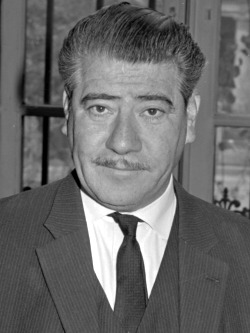
Aniceto Rodríguez Arenas (16 February 1917 – 27 May 1995) was a Chilean lawyer and politician, member of the Socialist Party of Chile. He served as deputy and senator, and played a key role in the reunification of Chilean socialism in exile during the military dictatorship.[1]
Early years
He studied at the Liceo Valentín Letelier de Santiago, and later at the Faculty of Law of the University of Chile, where he graduated as a lawyer.[1]
Political career
Rodríguez joined the Popular Socialist Party (PSP) in 1940. That same year he was elected Secretary General of the Federation of Students of the University of Chile, a post he held until 1943.[1]
In 1949 he was elected deputy for the 1st Metropolitan District (Puente Alto and San Miguel), serving until 1953. He was a member of the permanent commissions on Labor and Social Legislation, Public Education and National Defense. In 1951 he was appointed parliamentary advisor to the Caja Nacional de Empleados Públicos y Periodistas.[1]
He was elected senator in 1953 for Valdivia, Osorno, Llanquihue, Chiloé, Aysén and Magallanes (1953–1961), where he served on the commissions on Labor and Social Legislation, National Defense and Foreign Affairs. In 1957 he was appointed director of the Banco del Estado.[1]
In 1961 he joined the Socialist Party of Chile, and was reelected senator for the same constituency (1961–1969), integrating the commissions on Internal Government, Internal Police and Regulations, and Finance. In 1964 he was a delegate to the Latin American Parliament meeting in Lima, Peru.[1]
Between 1965 and 1967 he was Secretary General of the Socialist Party, winning the post at the XXI General Congress with 166 votes against 64 for Mario Garay Pereira.[1]
He was again elected senator for Valdivia, Osorno and Llanquihue in 1969, serving until the 1973 coup d’état. He was part of the Foreign Affairs and Internal Government commissions.[1]
In 1969 the Socialist Party considered him a potential presidential candidate for the Unidad Popular. He declined in favor of unity, delivering a speech before the Central Committee on 26 August 1969, after which the Socialist Party designated Salvador Allende as its candidate. Rodríguez became general campaign manager for Allende in the successful 1970 presidential election.[1]
Dictatorship and exile
The 1973 Chilean coup d’état abruptly ended his mandate, as Congress was dissolved by Decree Law N° 27 of 21 September 1973. He was stripped of his Chilean nationality by the military junta and went into exile in Venezuela (1973–1987).[1]
During exile he was one of the organizers of the 1975 Colonia Tovar meeting, which brought together leaders of proscribed Chilean democratic parties such as the Socialist Party, the Christian Democrats, the Radicals and the Christian Left. This meeting was later seen as a key antecedent to the Concertación de Partidos por la Democracia.[1]
He also promoted the reunification of the Socialist Party and participated in the Democratic Alliance.[1]
Return to Chile and later years
Back in Chile, Rodríguez joined the Party for Democracy (PPD). In the 1989 Chilean parliamentary election he ran for senator for the 17th Senatorial Constituency (Southern Los Lagos Region), but was narrowly defeated by Sergio Páez Verdugo (DC).[1]
In 1990 he was appointed ambassador of Chile to Venezuela, serving until his death in Caracas in May 1995.[1]

