
|
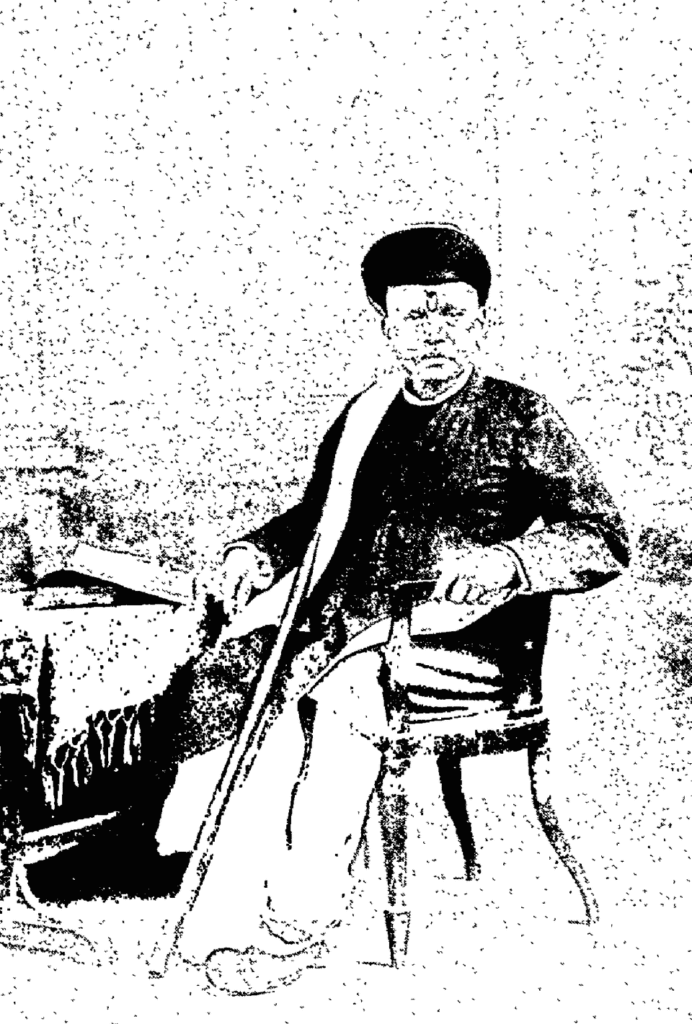
Asharam Dalichand Shah |
|
|---|---|
 |
|
| Born | 8 February 1842[1] |
| Died | 26 March 1921 (aged 79)[1] |
| Occupation | writer |
| Language | Gujarati |
| Notable works |
|
| Children | Mulchand |
 |
|
Asharam Dalichand Shah (8 February 1842 ― 26 March 1921) was Gujarati language writer who pioneered the research in Gujarati proverbs and idioms.[2]
Ancestry and Background
Asharam was born into a Shrimali Bania family with a history of commerce and government service.[3] His grandfather, Nanchand Shah, and his father, Dalichand Shah, were originally from Ahmedabad. Following the devastating famine of 1812–13, Nanchand, 51, Dalichand, 19, and the rest of the family migrated to Kathiawar to seek new opportunities.[4] In the early 19th century, Nanchand Shah secured contracts to supply grain and fodder to the British Army and the Commissariat during military campaigns in the region, specifically working with Parsi contractors named Kamaji and Dadabhai.[4] When the British established a permanent political agency in Rajkot around 1820, the family settled in the Rajkot Civil Camp, becoming one of the earliest settlers in the new colonial administrative hub.[5]
The family originally followed Jainism. However, in 1828, Swaminarayan, the founder of the Swaminarayan Sampraday, visited Rajkot to meet the Governor of Bombay, Sir John Malcolm.[6] Nanchand and Dalichand attended this meeting and were deeply influenced by Swaminarayan’s teachings and the devout conduct of his paramhansas (monks). Consequently, the family converted to the Swaminarayan faith, which remained their family religion thereafter.[6]
Early Life and Education
Asharam was born on 8 February 1842 (Maha Shivaratri, Samvat 1898) in Rajkot.[7] His mother, Vakhatba, had previously lost several male children in infancy. To ward off bad luck for Asharam, she performed various traditional practices common to the era, including piercing the infant’s nose to adorn it with a ring (usually worn by females) and symbolically “selling” the child to a neighbor named Kashi for a winnowing fan full of salt.[7]
Education
Asharam’s education began in an era when formal schooling was in its infancy in Kathiawar. He first attended a mission school run by Christian missionaries in Rajkot Camp, where his first teacher was Nandram Mehtaji.[8] Later, the government established a Gujarati school, where he was taught by Tryambaknath and Ganpatram.[8]
Following the Wood’s Despatch of 1854, English education began to spread in the Bombay Presidency. Asharam was among the first cohort of students to join the newly established English school in Rajkot. He was a bright student and, in 1859, participated in the first-ever University Entrance (Matriculation) examination held in the province.[9] The examination was conducted under the supervision of Political Agent Colonel J.T. Barr.[10] Although Asharam passed the examination, the conservative social customs of the time and the lack of railway connectivity prevented his parents from sending him to Mumbai for college education at the Elphinstone Institute.[11]
Career
Asharam Shah’s career spanned over four decades, during which he transitioned from an educator to a high-ranking administrator in various princely states.
Educational Service (1859–1865)
Unable to pursue higher studies, Asharam joined the Agency’s Education Department. In July 1859, at the age of 17, he was appointed as a teacher in Limbdi.[12] At Limbdi, he gained the confidence of the administration and was appointed as the tutor to the minor heir apparent, Jaswantsinhji, who later became the Thakur Sahib of Limbdi.[13]
In July 1863, he was transferred to Jamnagar (Nawanagar State) as a teacher.[13] Jamnagar was a larger city with a growing demand for English education. Asharam started private English classes for young adults from the mercantile and administrative communities, which became highly popular.[14] His success attracted the attention of the ruler, Jam Vibhaji II, and his Diwan, Sheth Bhagwanji, who eventually offered him a distinct role in the state administration.[14]
Administrative Service in Jamnagar
In 1865, Asharam resigned from the Education Department to join the Jamnagar state service. He was appointed to assist Vinayakrao Bhagvat, a state official, in a high-stakes boundary dispute regarding the “Atmaram” villages against a neighboring state.[15] The case was being arbitrated by Narayan Vasudev Kharkar. Asharam’s knowledge of local geography and records contributed significantly to Jamnagar winning the dispute.[15]
However, his time in Jamnagar was cut short by court intrigues. The Diwan, Sheth Bhagwanji, grew suspicious of the “newly educated” officials (Asharam and Bhagvat) and feared they might undermine his influence with the Jam Sahib.[16] Additionally, the Diwan was involved in a succession intrigue regarding Kalubha, an illegitimate son of the ruler, which Asharam and his group did not support. Consequently, Asharam and Bhagvat were dismissed from Jamnagar service in late 1865.[17]
Legal Practice and Return to Service
Returning to Rajkot, Asharam obtained a Sanad (license) to practice as a pleader (lawyer) in the Agency courts, which had recently been established by Colonel R. H. Keating.[18] He practiced law for a short period in 1866–67. However, the financial instability of the legal profession at the time, combined with family debts, led him to accept a stable employment offer from the Morvi State.[19]
Service in Morvi State
Asharam’s tenure in Morvi was one of the most significant phases of his career. He was initially appointed as a tutor to the young heir, Waghji II, by Thakur Sahib Rawaji.[20] His role quickly expanded to that of a Private Secretary, advisor, and a member of the legal council.[20]
The Jortalbi Dispute
Asharam played a pivotal role in the “Jortalbi” dispute between Morvi and Junagadh State. Junagadh claimed a tribute (Zortalbi) from Morvi, a claim Morvi contested.[20] The case was initially heard by Captain Hebbert, where the decision went largely against Morvi. However, Asharam accompanied Thakur Sahib Rawaji to Mumbai to appeal the decision.[21] There, they met with the Governor, Sir Seymour Vesey-FitzGerald. Asharam assisted in drafting the appeals and provided critical data to the state solicitors. The Bombay Government’s final resolution overturned significant parts of the lower ruling, resulting in a favorable outcome for Morvi.[22]
Suppression of Outlaws (Bahirvatu)
Following the death of Thakur Sahib Rawaji, Morvi was placed under joint administration during the minority of Waghji II.
Asharam died on 26 March 1921.[1][2] He had served as the administrator of the several princely states of Kathiawar.[23]
Works
He published Gujarati Kahevat Sangraha (A Collection of Gujarati Proverbs) in 1911. It contained proverbs and idioms along with their versions, origin, use in different parts of Gujarat and circumstances or incidents which resulted in their origin. It also presented the transformation of proverb if it is originated from Sanskrit. He has also compared corresponding Hindi and Marathi proverbs.[2][24]
His son Mulchand had written his biography, Asharam Dalichand Shah ane Temno Samay (1934).[23][25]
Bibliography
See also
References
- ^ a b c Asharam Dalichand Shah (1911). Gujarati Kahevat Sangraha or A collection of Gujarati proverbs (PDF). p. 5.
- ^ a b c Mohan Lal (1992). Encyclopaedia of Indian Literature: Sasay to Zorgot. Sahitya Akademi. pp. 3939–3940. ISBN 978-81-260-1221-3.
- ^ Shah, Mulchand, Asharam (1934). Asharam Dalichand Shah ane Temano Samay [Asharam Dalichand Shah and His Times] (in Gujarati). Ahmedabad: Aditya Mundranalaya. p. 5.
{{cite book}}: CS1 maint: multiple names: authors list (link) - ^ a b Shah, 1934, p. 9.
- ^ Shah, 1934, p. 10.
- ^ a b Shah, 1934, p. 13-15.
- ^ a b Shah, 1934, p. 19.
- ^ a b Shah, 1934, p. 20.
- ^ Shah, 1934, p. 29-30.
- ^ Shah, 1934, p. 31.
- ^ Shah, 1934, p. 30-33.
- ^ Shah, 1934, p. 36.
- ^ a b Shah, 1934, p. 37.
- ^ a b Shah, 1934, p. 38.
- ^ a b Shah, 1934, p. 39.
- ^ Shah, 1934, p. 41.
- ^ Shah, 1934, p. 42.
- ^ Shah, 1934, p. 45.
- ^ Shah, 1934, p. 47.
- ^ a b c Shah, 1934, p. 52.
- ^ Shah, 1934, p. 53-54.
- ^ Shah, 1934, p. 55.
- ^ a b Who’s Who India. Tyson & Company. 1927. p. 232.
- ^ Indian Literature. Sahitya Akademi. 1958. p. 167.
- ^ Institute of Historical Studies (Calcutta, India) (1979). Historical biography in Indian literature. Institute of Historical Studies. p. 208.

