


According to the annexed reports of Yasmine Alnakari’s doctoral thesis (Université Paris 8, 2019), Pierre Tiéhé noted that the theory introduced a philosophical foundation departing from classical Greek and Western categories, while [[René Schérer]] described the approach as an epistemological framework applicable to studies of human and artificial intelligence.<ref>Tiéhé, Pierre (2019). Report on ”L’Unité Carrée des Intérêts (ISU)” – doctoral thesis annex 1. Université Paris 8.</ref><ref>Schérer, René (2019). Report on ”L’Unité Carrée des Intérêts (ISU)” – doctoral thesis annex 2. Université Paris 8.</ref>
According to the annexed reports of Yasmine Alnakari’s doctoral thesis (Université Paris 8, 2019), Pierre Tiéhé noted that the theory introduced a philosophical foundation departing from classical Greek and Western categories, while [[René Schérer]] described the approach as an epistemological framework applicable to studies of human and artificial intelligence.<ref>Tiéhé, Pierre (2019). Report on ”L’Unité Carrée des Intérêts (ISU)” – doctoral thesis annex 1. Université Paris 8.</ref><ref>Schérer, René (2019). Report on ”L’Unité Carrée des Intérêts (ISU)” – doctoral thesis annex 2. Université Paris 8.</ref>
Reception and criticism
Reception and
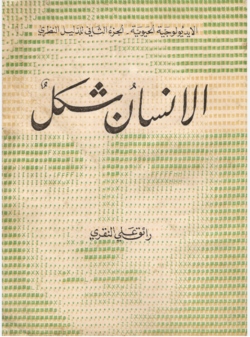
Michel [[Seurat, Michel|Seurat]] (1980), in *La Syrie d’aujourd’hui* (CNRS/CERMOC), discussed “Râ’iq al-Nuqarî” (Raiek Alnakari) and described his “vitalist intellectual production” and its role in Syrian ideological and academic circles.<ref>Seurat, Michel (1980). *La Syrie d’aujourd’hui*. Paris: CNRS / CERMOC. p. 247.</ref> In Damascus, the *Al-Baʿth* newspaper (22 October 1974) reported on a University of Damascus symposium about the book *Al-Insān Shakl* (“Man is Form”), which featured academic debate around Alnakari’s theory of vital form.<ref name=”Baath1974″>”Symposium at University of Damascus about ”Al-Insān Shakl””. *Al-Baʿth* (Damascus). 22 October 1974.</ref>
Early responses to Raiek Alnakari’s theory of form generated both philosophical engagement and critical reservations. During a University of Damascus symposium reported by the Syrian newspaper *Al-Baʿth* in 1974, several professors of philosophy discussed *Al-Insān Shakl* (“Man is Form”) from divergent perspectives. Participants including Adib al-Lajmi, Badiʿ al-Kasm, Asʿad al-Darqawi, Taysir Shaykh al-Ard, ʿAdil al-ʿAwwa, and Jalal al-Fariq al-Sharif expressed concerns that the theory’s vitalist language risked ambiguity or ideological overextension within contemporary philosophical discourse.[1]
[[File:University of Damascus Symposium on “Al-Insān Shakl” (1974).png|thumb|University of Damascus symposium on Raiek Alnakari’s book *Al-Insān Shakl* (*Man is Form*), as reported in *Al-Baʿth* newspaper on 22 October 1974. The image includes excerpts and photos from the original publication.]]
Historiography, Reception, and Scholarly Assessment
Early responses to Raiek Alnakari’s theory of form generated both philosophical engagement and critical reservations. During a University of Damascus symposium reported by the Syrian newspaper Al-Baʿth in 1974, several professors of philosophy discussed Al-Insān Shakl (“Man is Form”) from divergent perspectives. Participants including Adib al-Lajmi, Badiʿ al-Kasm, Asʿad al-Darqawi, Taysir Shaykh al-Ard, ʿAdil al-ʿAwwa, and Jalal al-Fariq al-Sharif expressed concerns that the theory’s vitalist language risked conceptual ambiguity or ideological overextension within contemporary philosophical discourse.[1]
Ammar Ayyash (Université de Ouargla, 2017) explored *La théorie hayawique de la connaissance chez Raïk Al-Nakari*, analyzing the epistemological framework of Hayawic Logic as an alternative to Western materialism and idealism.<ref>Ayyash, Ammar (2017). ”La théorie hayawique de la connaissance chez Raïk Al-Nakari” (Thesis). Ouargla: Université Kasdi Merbah.</ref>
Beyond these early critical reactions, later academic discussions addressed Alnakari’s work from descriptive and analytical perspectives. Outside Syria, the French philosopher Maurice Jangui examined Alnakari’s approach within the broader debate between materialism and vitalism, situating it among non-Marxist critiques of mechanistic epistemology.[2] In a separate context, Michel Seurat referred to Alnakari’s intellectual production as part of Syrian ideological debates of the late twentieth century, characterizing it as a form of radical vitalist thought whose political implications remained contested.[3] A critical report by Roger Garaudy, included in the annexes of Yasmine Alnakari’s doctoral dissertation, addressed Raiek Alnakari’s critique of Marxism and questioned the philosophical consistency of replacing historical materialism with a vitalist framework.[4]
== Legacy and Influence ==
References
The Hayawic UniLogic has since been discussed in philosophical and educational research addressing the relationship between logic, cognition, and systems theory. It serves as a transdisciplinary bridge between metaphysics, cognitive science, ethics, systems theory, and artificial intelligence.<ref name=”Alnakari1987″ />
== Historiography, Reception, and Scholarly Assessment ==
Early responses to Raiek Alnakari’s theory of form generated both philosophical engagement and critical reservations. During a University of Damascus symposium reported by the Syrian newspaper ”Al-Baʿth” in 1974, several professors of philosophy discussed ”Al-Insān Shakl” (“Man is Form”) from divergent perspectives. Participants including Adib al-Lajmi, Badiʿ al-Kasm, Asʿad al-Darqawi, Taysir Shaykh al-Ard, ʿAdil al-ʿAwwa, and Jalal al-Fariq al-Sharif expressed concerns that the theory’s vitalist language risked conceptual ambiguity or ideological overextension within contemporary philosophical discourse.<ref name=”AlBaath1974″ />
Beyond these early critical reactions, later academic discussions addressed Alnakari’s work from descriptive and analytical perspectives. Outside Syria, the French philosopher Maurice Jangui examined Alnakari’s approach within the broader debate between materialism and vitalism, situating it among non-Marxist critiques of mechanistic epistemology.<ref name=”JanguiVitalism” /> In a separate context, Michel Seurat referred to Alnakari’s intellectual production as part of Syrian ideological debates of the late twentieth century, characterizing it as a form of radical vitalist thought whose political implications remained contested.<ref name=”Seurat1982″ /> A critical report by Roger Garaudy, included in the annexes of Yasmine Alnakari’s doctoral dissertation, addressed Raiek Alnakari’s critique of Marxism and questioned the philosophical consistency of replacing historical materialism with a vitalist framework.<ref name=”GaraudyAppendix” />
== References ==
== References ==
<references />6 November 2025 – Final proofreading and verification of references
{{reflist}}
<ref name=”AlBaath1974″>{{cite news
|date=22 October 1974
|title=Symposium at University of Damascus about Al-Insān Shakl
|newspaper=Al-Baʿth
|location=Damascus
|language=ar
}}</ref>
<ref name=”JanguiVitalism”>{{cite book
|last=Jangui
|first=Maurice
|title=Matérialisme et vitalisme : connaissance et vie
|publisher=Presses universitaires
|year=1976
|language=fr
}}</ref>
<ref name=”Seurat1982″>{{cite book
|last=Seurat
|first=Michel
|title=La Syrie d’aujourd’hui
|publisher=CNRS / CERMOC
|year=1980
|location=Paris
|page=247
|language=fr
}}</ref>
<ref name=”GaraudyAppendix”>{{cite thesis
|last=Alnakari
|first=Yasmine
|title=Les intérêts éducatifs de la pédagogie inspirée du carré logique ISU
|type=Doctoral dissertation
|publisher=Université Paris 8
|year=2019
|language=fr
|quote=Appendix includes a critical report by Roger Garaudy addressing Raiek Alnakari’s critique of Marxism.
}}</ref>
Hayawic Logic of Form (Arabic: المنطق الحيوي التوحيدي للشكل; also known as **UniLogic**) is a contemporary philosophical and scientific framework developed by Raiek Alnakari and expanded by Yasmine Alnakari. It proposes that form (الشكل) is not a static structure but a vital unifying logic — a living dynamic that organizes all existence through motion, relation, and transformation.[1]


The Hayawic (حيوي, “vital”) UniLogic reinterprets form beyond both Aristotelian and Platonic traditions. For Alnakari, form is neither a passive essence (hylomorphism) nor a transcendent ideal (eidos), but a universal process of formation and transformation governing all beings — material or spiritual, organic or artificial, sacred or profane.[2][2]
> “Every being is not merely having a form, but is itself a form — even when it appears formless.” — Raiek Alnakari
This concept transforms “form” from a metaphysical abstraction into a bio-hayawic law of vitality, describing existence as an ever-renewing network of dynamic relations among living interests.[3]
The Five Universal Laws of Hayawic Logic
[edit]
From this bio-hayawic foundation, Alnakari formulated five universal laws defining the UniLogic of Form:
- Every being is form-like, even if it appears formless.
- Every form is dynamic (both mover and moved), even if it appears still.
- Every form is inclusively vital (whole and partial at once), even if it appears empty or dead.
- Every form is probabilistic (necessity and coincidence at once), even if it appears certain.
- Every form is relative (universal and particular at once), even if it seems absolute.[4]
Academic Background
[edit]
Alnakari first articulated this UniLogic in his *Doctorat d’État* dissertation *Le principe hayawi dans la pensée philosophique et politique arabe contemporaine* (Université Paris 8, 1984). It was evaluated by Professor Pierre Tillet, who described it as “a radically new category in the history of philosophy, breaking the classical Greek dualism between matter and spirit.”[2]
Research at George Washington University (1993–1995)
[edit]
Between 1993 and 1995, Alnakari served as a Visiting Scholar in Human Science at Columbia College / Graduate School of Arts & Sciences, George Washington University. His research project, titled “UniLogic Form Research in Natural and Human Sciences,” extended the Hayawic UniLogic into a transdisciplinary model unifying biological, psychological, and social sciences.[4]
> “We are not in the Age of Information but in the Age of Form.” — (Lecture at George Washington University, 1994)
Modern Applications
[edit]
In 1998, Marguerite J. Palmer, a researcher and officer at the U.S. Department of Defense, applied Alnakari’s four-valued logic model to electronic-circuit diagnosis at George Mason University. Her work informed an IEEE publication by David C. Rine and Raiek Alnakari (2000) titled *A Four-Valued Logic B(4) of E(9) for Modeling Human Communication*, which was presented at the IEEE International Symposium on Multiple-Valued Logic.[5][6]
Comparative Evaluation
[edit]
According to the annexed reports of Yasmine Alnakari’s doctoral thesis (Université Paris 8, 2019), Pierre Tiéhé noted that the theory introduced a philosophical foundation departing from classical Greek and Western categories, while René Schérer described the approach as an epistemological framework applicable to studies of human and artificial intelligence.[7][8]
Reception and Independent Studies
[edit]
Michel Seurat (1980), in *La Syrie d’aujourd’hui* (CNRS/CERMOC), discussed “Râ’iq al-Nuqarî” (Raiek Alnakari) and described his “vitalist intellectual production” and its role in Syrian ideological and academic circles.[9] In Damascus, the *Al-Baʿth* newspaper (22 October 1974) reported on a University of Damascus symposium about the book *Al-Insān Shakl* (“Man is Form”), which featured academic debate around Alnakari’s theory of vital form.[10]
.png)
Ammar Ayyash (Université de Ouargla, 2017) explored *La théorie hayawique de la connaissance chez Raïk Al-Nakari*, analyzing the epistemological framework of Hayawic Logic as an alternative to Western materialism and idealism.[11]
Legacy and Influence
[edit]
The Hayawic UniLogic has since been discussed in philosophical and educational research addressing the relationship between logic, cognition, and systems theory. It serves as a transdisciplinary bridge between metaphysics, cognitive science, ethics, systems theory, and artificial intelligence.[3]
- ^ Alnakari, Raiek (1984). Le principe hayawi dans la pensée philosophique et politique arabe contemporaine (Doctorat d’État thesis). Université Paris 8.
- ^ a b c Tillet, Pierre (1984). Doctoral jury report on Le principe hayawi (Report). Université Paris 8.
- ^ a b Alnakari, Raiek (1987). Al-Manṭiq al-Ḥayawī [Hayawic Logic]. Paris: Dar al-Dirasat al-ʿArabiyya al-Duwaliyya.
- ^ a b Visiting Scholar record: Raiek Alnakari. George Washington University Archives (1995). Retrieved 2025-11-07.
- ^ Palmer, Marguerite J. (1998). Applications of Hayawic Logic in Error Detection for Electronic Circuits (Thesis). George Mason University (U.S. Department of Defense).
- ^ Rine, David C.; Raiek Alnakari (2000). “A Four-Valued Logic B(4) of E(9) for Modeling Human Communication.” IEEE ISMVL Conference, Washington D.C.
- ^ Tiéhé, Pierre (2019). Report on L’Unité Carrée des Intérêts (ISU) – doctoral thesis annex 1. Université Paris 8.
- ^ Schérer, René (2019). Report on L’Unité Carrée des Intérêts (ISU) – doctoral thesis annex 2. Université Paris 8.
- ^ Seurat, Michel (1980). *La Syrie d’aujourd’hui*. Paris: CNRS / CERMOC. p. 247.
- ^ “Symposium at University of Damascus about Al-Insān Shakl“. *Al-Baʿth* (Damascus). 22 October 1974.
- ^ Ayyash, Ammar (2017). La théorie hayawique de la connaissance chez Raïk Al-Nakari (Thesis). Ouargla: Université Kasdi Merbah.
6 November 2025 – Final proofreading and verification of references



