
One of Asia’s two principal areas of illicit drug production
The Golden Crescent is one of two illicit opium producing regions in Asia, comprising Afghanistan, Iran, and Pakistan, the other being the Golden Triangle in Southeast Asia. The Golden Crescent, the older of the two, is also called The Silk Route of Drugs[1]. It is a mountainous region at the intersection of Central, Southern, and Western Asia, the mountainous peripheries of which, when viewed on a map, trace the shape of a crescent, thus giving it the name (please scroll down in this page to the map in the “Markets” section of this article to view it).
Raw opium is obtained from unripe seeds of the opium poppy. Manufacturers produce two important end products from raw opium: morphine, a pharmaceutical drug, and heroin, which is an illicit drug. They also produce a small amount of codeine, another psychotropic drug from it. (Please refer to the section titled “Heroin processing in Southeast Asia” in the Wikipedia article on the Golden Triangle for a simple, but detailed explanation of how manufacturers convert raw opium to morphine or heroin.)
The vast world market ($65 billion per UNODC[2]) for illicit opiates[3] and its unparalleled profit potential lures millions worldwide easily into drug-trafficking, some rising to the top echelon of drug lords who are super-rich, live in top luxury, own powerful private armies, vie with influential politicians for control, etc., and are so powerful that they are a law unto themselves. History reveals that they are the kind who will not hesitate to subordinate law enforcement officers who challenge them by offering them stellar bribes or ‘eliminate’ (kill) those who will not budge.
Of the three countries that comprise the Golden Crescent, Afghanistan produces the lion’s share of opiates, i.e., opium, morphine, and codeine, at over 90%[1]. Pakistan and Iran produce the rest. All three also produce hashish (cannabis), but Afghanistan dominates in this area as well.
Opium cultivation in Afghanistan rose significantly in the 1990s. However, this trend suffered a major blow in 2001, during the US invasion of Afghanistan. However, in 2007, opium cultivation picked up again after the Taliban government fell. The growth was explosive, and reports indicate that 2007 marked the country’s highest opium cultivation year since the 1990s. Afghanistan’s opium production continued to dominate the world, and it was the world’s top opium producer between 2001 and 2024 (please see the opening para of the Wikipedia article titled “Opium production in Afghanistan” for details). After a 14-year pause, the Taliban ruthlessly suppressed opium cultivation again in 2021 when they returned to power, resulting in a 95% fall in cultivation by 2023[4]. Consequently, Myanmar, a country included in the Golden Triangle, surpassed Afghanistan in 2025.
Currently, Myanmar stands as the world’s #1 opium producer (although final figures are not available yet, a 2023 December BBC article had predicted 1080 tonnes of production vs 330 for 2023 for Myanmar and Afghanistan, respectively[4]). A December 2025 UNODC document has confirmed this position, reporting that Myanmar actually produced an estimated 1,010 tons (822-1,340 metric tons) of opium in 2025, making Myanmar the undisputed leader after December 2025.[5]
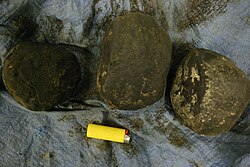
_opium_seized_in_Afghanistan.jpg)
The Golden Crescent has a much longer history of opium production than Southeast Asia’s Golden Triangle. The Golden Triangle emerged as a modern-day opium-producing entity only in the 1980s, long after the Golden Crescent had achieved this landmark in the 1950s. During the US invasion of Afghanistan in 2001, in retaliation for the September 11th terrorist attacks, the Golden Crescent’s opium production took a huge hit, 2001 producing almost 90% less opium than in 2000[6].
The majority of opium produced in Afghanistan comes from Helmand (the largest) and Kandahar (the 2nd largest) provinces[7].
According to November 2025 information, the Golden Crescent produced only 296 tons of opium, which is about a third of its annual production before the Taliban’s ban on opium production in 2022.[8] Due to the Taliban’s involvement, weapons trafficking (which historically started before drug trafficking) happens side by side with drug trafficking.
Note: In its heydays, Afghanistan produced around 7,500 tons of opium (2008) and around 6,300 tons in 2013, which is a far cry from the 296 tons it produced in 2025.[9]
Despite worldwide efforts to capture and seize as much opium product as possible, total opiate[3] seizures brought in only 23.5% of the total estimated product distributed worldwide. Of these seizures, around 97% of opium and morphine seizures were made in the Middle East, while heroin seizures happened mostly in India, the Middle East, and Europe.
Of all the opium produced in Afghanistan, about half is transformed into heroin in the country itself, which uses around 7% of its heroin production before exporting the rest illegally to global markets via Iran. Next along the travel route, Iran is known to use over half of the inflow it receives before passing on the remainder to the rest of the world.
In Afghanistan, only 1% of the heroin that is exported illegally is intercepted and destroyed by the national government. Instead, most of the seizures are surprisingly made in Iran. This is because it is easy to arrest traffickers while crossing the border from Afghanistan into Iran, en route to global destinations.
According to raw crime data, the majority of traffickers operating in the Golden Crescent are Nigerians and Pakistanis. These traffickers, essential to the transportation of the drugs from the source to end-user markets, make large profits because of the high risk their jobs involve. Since no exact data exists about how much traffickers make per day, it is not possible to provide any further information.
A rough estimate of how many people are currently involved in drug trafficking is above one million.

The Golden Crescent plays a predominant role in the global illicit drug trade, supplying opiates[3] to a wide range of international markets. Of the two opium production ‘biggies’ of the world, i.e., the Golden Crescent and the Golden Triangle, the former serves a larger market, at 64% more than the latter.
To gain some perspective of relative size, in 2007, at the peak of its opium production, the Golden Crescent produced more than 8,000 of the world’s total of about 9,000 tons of opium. The Golden Crescent dominates the cannabis resin market too because of high yields in the region (145 kg/ha), four times more than Morocco (36 kg/ha). It currently produces and distributes around 296 tons of opiates[3][8] to around 316 million users[10] in Africa, Europe, the Americas, and Central Asia.
Although the Golden Crescent and the Golden Triangle produce nearly the same end products, it is notable that their markets do not overlap geographically. While the Golden Crescent serves markets in Europe, Africa, and parts of Asia, including western China, the Golden Triangle dominates the Asian drug markets, viz., Thailand, Laos, Cambodia, Vietnam, Malaysia, Indonesia, Japan, and South Korea.
According to the “World Drug Report 2025,” by Dianova,[10] there were 316 million drug abusers (ages 15–64) worldwide in 2023. The breakup is as follows:
To cater to the global demand (above), traffickers who source drugs from the Golden Crescent (which can be effectively treated as Afghanistan alone because of its dominance) use the three following primary routes between Afghanistan and their end destinations[11]:
- The Balkan Route (a.k.a the Western route): 53% of the trade output (from Afghanistan) first enters Iran, which consumes over half of what it receives and transmits the rest. Some part of the transmitted quantity (intended for Europe) travels via Turkey and Azerbaijan to Europe, and the rest (intended for Iraq and the Arabian Peninsula) via southern ports.[11]
- The Northern Route: 14% of the Afghan output passes through Turkmenistan, Uzbekistan, Kyrgyzstan, and Tajikistan (in succession) to destinations in Europe, Russia, and, now, increasingly, China.[11]
- The Southern Route: the balance 33% of the illegally exported drugs travel through the porous Afghanistan-Pakistan border into Baluchistan and the North-western Frontier province, both for internal use in Pakistan and later for onward transmission to China, India, African states, as well as the rest of South Asia.[11]
- The Khyber Pass also serves as an important highway for the drug trade close to farming regions along the Pakistan-Afghanistan border.[11]
Karachi and Quetta (Pakistan) are important intermediate hubs for transporting opiates into global markets.[11]
Although not a market in the common sense, opium production and trafficking are known to fund the Taliban’s military activities.[12]
Global drug abuse and its adverse health effects
[edit]
The Merriam-Webster online dictionary assigns two meanings to the word “opiates”[13]:
- “an alkaloid drug (such as morphine or codeine) that contains, or is derived from opium, binds to cell receptors primarily of the central nervous system and gastrointestinal tract, acts to block pain, induce sedation or sleep, depress respiration, and produce calmness or euphoria, and is associated with physiological tolerance… physical and psychological dependence, and addiction upon repeated or prolonged use”, and
- “a synthetic or semi-synthetic drug (such as fentanyl or methadone) or an endogenous substance (such as beta-endorphin) that binds to opiate cell receptors and produces physiological effects like those of opium derivatives.
The above meanings make abundantly clear the wide scope and potent effects that opiates[3] have on the human mind when used for medicinal purposes or for inducing euphoria.
(Excluding alcohol and tobacco), 316 million people were suffering from drug abuse worldwide in 2023 (ages 15–64), representing an over 20% increase since a decade earlier in 2013[14].
The trend is upward, and notably, higher than the rate of world population growth[14].
Prolonged use of opiates[3] for pleasure leads to the well-known destination of addiction, an immiserating trap and a stranglehold that takes a huge toll on lives the world over because escape is close to impossible; not to mention the trauma, depression, and despair borne by departing sufferers on their part and the hardships and mental torture suffered by their loved ones on the other.
An estimated 64 million people suffered from drug-induced health challenges in 2023, and at least 450,000 lost their lives in 2021[14]. The UNODC has warned that the toll may be much higher by 2025.
Drug lords and their social impact
[edit]
Despite the dark, dreaded sides of their lives, drug traffickers and especially drug lords have been able to gain ‘acceptance’ from society because media and movies have glamorized, mythologized, or at times glorified them. [15]
Here is a list of noteworthy influencers from this category:
Scarface (1983), directed by Brian De Palma, which is one of the most influential movies on drug lords, glorifies excess, power, and violence, despite its tragic ending. Blow (2001), produced and directed by Ted Demme, depicts the rise of American cocaine trafficker George Jung, who at one time was a major partner in drug lord Pablo Escobar’s drug business. El Infierno (2010), an award-winning black comedy crime film produced by Bandidos Films and directed by Luis Estrada, which popularizes narco-culture.
The highly influential Narcos (Netflix exclusive) on the lives of Pablo Escobar and the Cali Cartel is often criticized for romanticizing cartel leaders. El Patrón del Mal (2012), on Pablo Escobar, had a profound impact on Latin America, particularly in Colombia, and sparked debates on the idolization of criminals. El Chapo (2017), a co-production between Univision and Netflix, regarded as a grittier, more realistic alternative to the Narcos series, received praise for its authenticity and an in-depth look at Mexican political corruption. Queen of the South (2016–2021), featuring a female lead, Teresa Mendoza, driving a poverty-to-power crime drama narrative, redefined the drug cartel genre. And FX’s Snowfall (2017–2023), a critically acclaimed narrative on the Los Angeles crack cocaine epidemic of the 1980s, laid open and bare the socioeconomic devastation suffered by Black communities and connections to government.
The immensely successful Grand Theft Auto: Vice City (2002) series heavily draws on drug-lord archetypes and criminal glamour. The same goes for Scarface: The World Is Yours (2006) and Max Payne 3 (2012).
“El Chapo” (2015), by the band “The Game ft. Skrillex“ is perhaps the most prominent English song glorifying drug kingpinJoaquín “El Chapo” Guzmán. It contains lyrics elevating him to the high position of God. Similarly, Don Mayo (feat. Los Farmerz), a Mexican song by El Fantasma, praises the drug kingpin Ismael El Mayo Zambada, the founder of the Sinaloa Cartel.
The Godfather (1969), by Mario Puzo. While it focused on the American mafia, it inspired later drug-lord stories and trafficking related activities. Killing Pablo (2001), by Mark Bowden, recounts the king-size efforts the governments of the United States and Colombia, their respective military and intelligence forces, had to put in to hunt down drug king Pablo Escobar and dismantle his cartel. Narconomics: How to Run a Drug Cartel (2017) by Tom Wainwright, although characterized by its analytical content, popularized cartel figures[16].
Some drug lords have endeared themselves to society by donating liberally to charities and causes of social uplift for the poor and marginalized classes. Khun Sa, for instance, built the first paved roads, opened the first school, and a well-equipped, 60-bed hospital staffed by Chinese doctors, etc., in his Thai hometown of Thoed Thai in 2007 (details may be viewed in Khun Sa’s Wikipedia article). Due to this, he and a few charitable drug lords earned Robin Hood-like public images.
Some notable drug lords of the Golden Crescent
[edit]
Bashir Noorzai (Afghanistan), often called the “Pablo Escobar of the Middle East”, was one of the most powerful Afghan drug lords between the 1980s and the 2000s. US authorities arrested him in 2005 for smuggling a large quantity of heroin into the USA. Juma Khan, a Baloch trafficker from Nimruz Province, succeeded him. Juma lasted until 2008, when he, too, was arrested in Indonesia and vanished from public view until 2018.
Ayub Afridi (Pakistan), a tribal leader and politician, is believed to have founded the heroin drug trade in Afghanistan. He was arrested in 1995 by the USA and served a three-and-a-half-year jail term in that country before being sent back to Pakistan in 1999. After serving some minor sentences in Pakistan, he was finally incarcerated (in Pakistan) and passed away in jail in 2009.
Gulbuddin Hekmatyar (Afghanistan), a powerful mujahideen leader during the Soviet–Afghan War, although he’s best known as a warlord and politician, was allegedly involved in processing and trafficking heroin during the 1980s.
Regardless of how favorably the media and movies have repainted the faces of drug lords, the ominous, sinister, and deeply destructive potential of drugs on human life can never be dismissed lightly. Although not unequivocally condemned, the broad world consensus is against drugs which is considered a menace and an evil.
Paul Stanley, a leading member of the American rock band KISS and an anti-drug activist, once said that “Drugs are death in one form or another”[17]. His quote has become a watchword today. This quote implies that dabbling in illicit drugs in any capacity, however small, is a guarantee to eventual illegality, destruction, and death—cautioning everyone should stay clear—and not even touch drugs.
The ongoing global combative action by world nations against the menace of drugs is intensive, active, highly alert, widespread, and commendable. Countless lives have already been lost on this destructive life path, but there are millions left to save, and still more to come in the future that need to be steered away from it.
Because of the world’s overwhelmingly broad consensus condemning the illicit drug trade, the battle against drugs can be expected to increase and continue relentlessly into the future as well[18][19].
- ^ a b DRUG TRAFFICKING | IN THE GOLDEN CRESCENT AND THE GOLDEN TRIANGLE | CSS DIALOGUE REPORT. https://jgu.s3.ap-south-1.amazonaws.com/jsia/Drug+trafficking.pdf: Centre for Security Studies Jindal School of International Affairs O.P. Jindal Global University, Year of pub. June 2021. p. 4. CS1 maint: location (link)
- ^ WORLD DRUG REPORT 2010. https://www.unodc.org/documents/wdr/WDR_2010/World_Drug_Report_2010_lo-res.pdf: UNODC. 2010. p. 35. CS1 maint: location (link)
- ^ a b c d e f “What’s the Difference Between Opioids and Opiates? | Differences, Definitions, & Risks | Britannica,”. britannica.com. Retrieved January 27, 2026.
{{cite web}}: CS1 maint: url-status (link) - ^ a b “Myanmar overtakes Afghanistan as top opium producer”. bbc.com. Retrieved January 27, 2026.
{{cite web}}: CS1 maint: url-status (link) - ^ Myanmar Opium Survey 2025 Cultivation, Production, and Implications. https://www.unodc.org/roseap/uploads/documents/Publications/2025/Myanmar_Opium_survey_2025_web.pdf: UNODC (published December 2025). 2025. pp. iii (7 of 64). CS1 maint: location (link)
- ^ “Figure – PMC”. pmc.ncbi.nlm.nih.gov. Retrieved January 27, 2026.
{{cite web}}: CS1 maint: url-status (link) - ^ “Prosperity or Penury: The political and economic fallout of the opium ban in Afghanistan – Afghanistan Analysts Network – English”. afghanistan-analysts.org. Retrieved January 27, 2026.
{{cite web}}: CS1 maint: url-status (link) - ^ a b “Afghanistan: Opium cultivation drops sharply, but regional trafficking rises | The United Nations Office at Geneva,”. ungeneva.org. Retrieved January 27, 2026.
{{cite web}}: CS1 maint: url-status (link) - ^ “Figure – PMC”. pmc.ncbi.nlm.nih.gov. Retrieved January 26, 2026.
{{cite web}}: CS1 maint: url-status (link) - ^ a b “World Drug Report 2025: Crisis and Opportunity – Dianova”. dianova.org. Retrieved January 25, 2026.
{{cite web}}: CS1 maint: url-status (link) - ^ a b c d e f DRUG TRAFFICKING | IN THE GOLDEN CRESCENT AND THE GOLDEN TRIANGLE | CSS DIALOGUE REPORT. https://jgu.s3.ap-south-1.amazonaws.com/jsia/Drug+trafficking.pdf: Centre for Security Studies Jindal School of International Affairs O.P. Jindal Global University. June 2021. p. 5. CS1 maint: location (link)
- ^ “Interpol: Drugs Sub-Directorate: Heroin”. Interpol. 2007. Archived from the original on 2015-01-11. Retrieved 2007-07-05.
- ^ “OPIATE Definition & Meaning – Merriam-Webster”. merriam-webster.com. Retrieved January 27, 2026.
{{cite web}}: CS1 maint: url-status (link) - ^ a b c “World Drug Report 2025: Crisis and Opportunity – Dianova”. dianova.org. Retrieved January 25, 2026.
{{cite web}}: CS1 maint: url-status (link) - ^ The list follows immediately (below) mentioning movies, tv serials, video games, etc., that are the examples.
- ^ “The /r/books bookclub selection for April is Narconomics: How to Run a Drug Cartel by Tom Wainwright!”. reddit.com. Retrieved January 27, 2026.
{{cite web}}: CS1 maint: url-status (link) - ^ “Paul Stanley Quotes”. brainyquote.com. Retrieved January 27, 2026.
{{cite web}}: CS1 maint: url-status (link) - ^ “International campaign against traffic in drugs : resolution / adopted by the General Assembly | Refworld”. refworld.org. Retrieved January 27, 2026.
{{cite web}}: CS1 maint: url-status (link) - ^ “International action to combat drug abuse and illicit trafficking : resolution / adopted by the General Assembly | Refworld”. refworld.org. Retrieved January 27, 2026.
{{cite web}}: CS1 maint: url-status (link)

