
KARACHI: The Federation of Pakistan Chambers of Commerce and Industry (FPCCI) has identified the logistics sector as a major structural constraint to trade and investment, with inefficiencies costing the economy significantly more than in advanced economies.
FPCCI President Atif Ikram Sheikh said Pakistan’s logistics sector accounts for 15.6pc of GDP, compared to 8-9pc in developed economies such as the United States, Japan, and Singapore. He warned that this high cost continues to erode Pakistan’s trade competitiveness.
Citing the FPCCI Policy Advisory Board’s latest policy brief, “Pakistan’s Logistics Performance and Its Impact on Trade Competitiveness,” Mr Sheikh highlighted the country’s steep fall in the World Bank’s Logistics Performance Index (LPI) — from 68th position in 2016 to 122nd in 2018. Notably, Pakistan was excluded altogether from the 2023 index.
He noted that regional peers like India, Vietnam, and Bangladesh have improved logistics infrastructure and performance, which has helped them better integrate into global value chains.
Pakistan’s logistics cost 15.6pc of GDP, double that of advanced economies
In Pakistan, over 94pc of cargo is transported by road, while rail carries just 6pc — despite being a cheaper and more sustainable option. Operational locomotives have declined from 528 in 2011 to 449 in 2025. Freight volumes dropped from 7.4mn tonnes in FY20 to 5.8m tonnes in FY25.
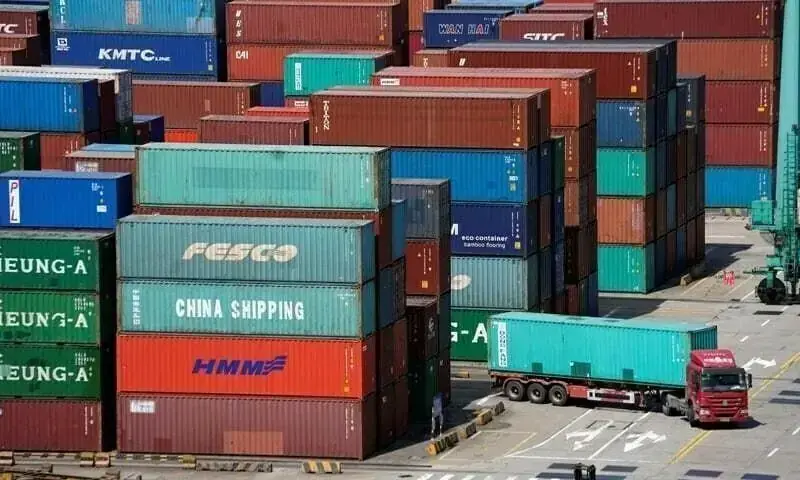
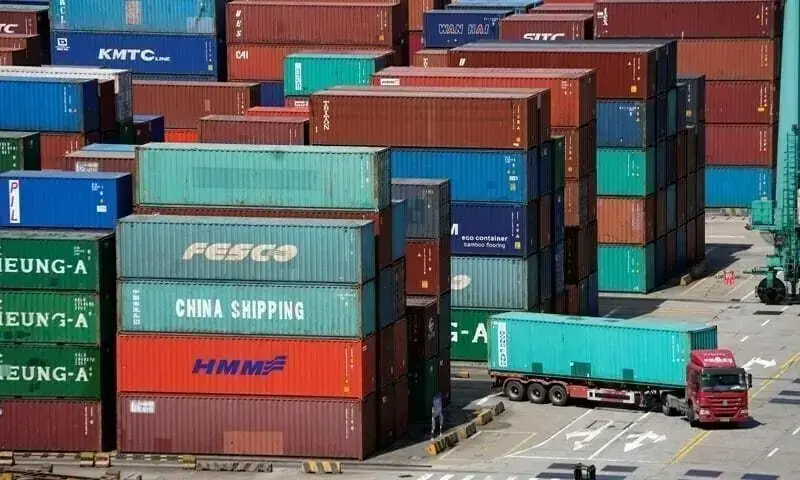
Port inefficiencies are also a drag. Karachi Port and Port Qasim, which handle over 95pc of external trade, operate at just one-third of their capacity. The average container dwell time ranges from 5.5 to 6.5 days, compared to India’s 2.6 days for imports, Bangladesh’s 1.6 days for exports, and Vietnam’s four days for exports.
Gwadar Port remains marginal, handling less than 0.5pc of total trade, mainly due to weak hinterland connectivity and limited integration into the national supply chain.
Post-harvest losses further add to inefficiencies. Mr Sheikh estimated that 30-40pc of fruits and vegetables are wasted due to inadequate warehousing and cold-chain facilities.
Published in Dawn, October 2nd, 2025

