


=== Career ===
=== Career ===
While contributing to research at the Department of the University of Paris 8, Benayoun founded his own digital art studio in the late 1980s to connect fiction, architecture, and digital modelling, creating an aesthetic of the virtual well before the arrival of VR headsets. In 1989, he co-founded Z-A Production, which enabled the development of early 3D computer graphics and interactive media projects <ref>{{Citation | vauthors=((V2Lab)) | year=2010 | title=Maurice Benayoun | url=https://v2.nl/people/maurice-benayoun | access-date=10 December 2025}}</ref><ref>{{Citation | vauthors=((V2Lab)) | year=2010 | title=Maurice Benayoun | url=https://v2.nl/people/maurice-benayoun | access-date=10 December 2025}}</ref>.
Benayoun taught in contemporary and fine arts at [[Pantheon-Sorbonne University]]. In 1987 he co-founded Z-A Production (1987–2003), a [[computer graphics]] and [[virtual reality]] private lab.{{citation needed|date=November 2021}}
In 2011, he initiated the H2H Lab (Human-to-Human Lab), a consortium of public and private laboratories examining art as a form of human mediation, and contributed to the founding of the Arts-H2H Labex (Lab of Excellence) coordinated by Paris 8 University <ref>{{cite book | vauthors=((Benayoun, M.)), ((Bares, J.)) | date=31 October 2016 | chapter=What Urban Media Art Can Do | title=Urban Media Art paradox: Critical Fusion vs. Urban Cosmetics | publisher= Avedition Gmbh,Csi | pages=450 | isbn=978-3-89986-255-3}}</ref>.During his tenure at Paris 1 University (1984-2009), Benayoun taught at the French National School of Art (ENSBA, 1995-1997) where he was an invited artist and professor.
Between 1990 and 1993, Benayoun collaborated with Belgian graphic novelists [[François Schuiten]] and philosopher [[Benoît Peeters]] on ”[[Quarxs]]”, the first animation series made of HD computer graphics, exploring variant creatures with alternate physical laws.<ref name=Wilson705>Stephen Wilson, ”Information Arts: Intersections of Art, Science, and Technology”, MIT Press, 2002, p705. {{ISBN|0-262-73158-4}}</ref>
Since 2014, he has held academic positions outside France, serving as Professor at the School of Creative Media, City University of Hong Kong, where he established the Neuro-Design Lab <ref>{{Citation | vauthors=((CityU, S.)) | year=2020 | title=Neuro-Design Lab | url=https://www.scm.cityu.edu.hk/research/labs/neuro-design-lab | access-date=10 December 2025}}</ref>. He retired from City University in 2023. In 2024, he was appointed Chair Professor at the School of Arts and the School of Architecture and Urban Planning at Nanjing University, China <ref>{{Citation | vauthors=((Nanjing University)) | year=2024 | title=Maurice Benayoun | url=https://art.nju.edu.cn/arten/25/ef/c55415a730607/page.htm | access-date=10 December 2025}}</ref>.
For his first solo show, Benayoun presented a virtual reality installation linking two art museums: the [[Centre Pompidou|Pompidou Center in Paris]] and the [[Musée d’art contemporain de Montréal]].<ref>Lars Qvortrupp, ”Virtual Space: Spatiality in Virtual Inhabited 3d Worlds”, Springer, 2002, p222. {{ISBN|1-85233-516-5}}</ref> Benayoun conceived and directed the exhibition ”Cosmopolis, Overwriting the City” (2005), an art and science immersive installation presented during the French Year in [[China]] in Shanghai, Beijing, Chengdu, and Chongqing. This was Maurice Benayoun’s first experience in China, and the reception by the public played an important role in later Benayoun’s move to Asia.<ref>{{Cite web|url=http://www.scm.cityu.edu.hk/profile/M.BENAYOUN|title = BENAYOUN, Maurice | School of Creative Media}}</ref>
=== Key concepts ===
=== Key concepts ===
French visual artist and theorist (born 1957)
|
Maurice Benayoun |
|
|---|---|
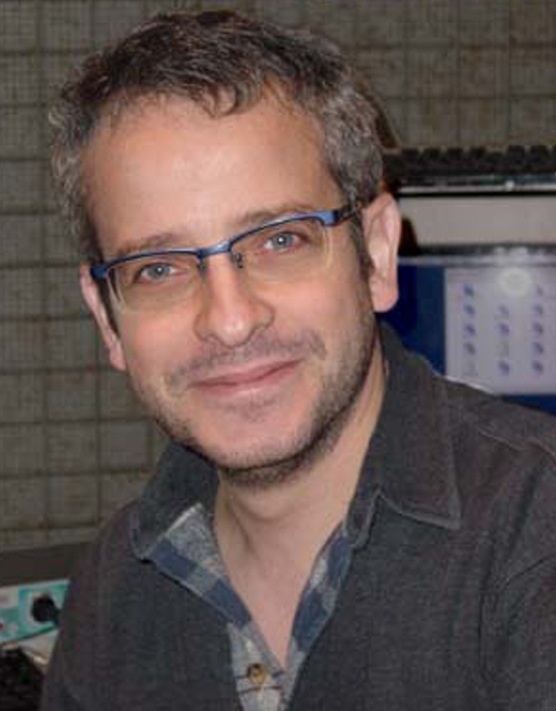
 Maurice Benayoun in 2000 |
|
| Born |
Maurice Benayoun (1957-03-29) 29 March 1957 |
| Education | Pantheon-Sorbonne University |
| Known for | New Media Art |
| Notable work | Quarxs (1991) Tunnel under the Atlantic (1995) World Skin, a Photo Safari in the Land of War (1997) |
| Awards | Golden Nica Ars Electronica 1998, Chevalier des Arts et Lettres 2000, Siggraph 1991, Villa Medicis hors les murs, 1993, Imagina, 1993, International Monitor Awards… |
| Website | www.benayoun.com |
Maurice Benayoun (born 29 March 1957), also known as MoBen (Chinese: 莫奔), is a French new-media artist, curator, and theorist whose work has been presented internationally in the context of media art and digital culture since the late 1980s. His practice addresses the ways in which emerging technologies influence human perception, social interaction, and contemporary cultural practices.
Benayoun has described his approach as “Open Media,” a term he uses to refer to artistic practices that integrate technological systems, audience participation, and public or networked contexts [1]. His work spans video, computer graphics, immersive virtual reality, internet-based art, performance, EEG, 3D Printing, robotics, artificial intelligence, NFTs, and Blockchain-based based artworks, installations and interactive exhibitions. [2]. He is known for large-scale public and urban media projects that engage civic space and participatory processes, often employing data-driven and networked systems to explore relationships between individuals and society [3].
Since the early 2000s, Benayoun has worked extensively in Asia, contributing to exchanges between Western and East Asian cultural contexts. After spending a decade based in Hong Kong, he has continued his practice and academic activities between Paris and Nanjing [4].
Maurice Benayoun was born in Mascara, Algeria, in March 1957. His father, who shared the same name, was killed in 1956, a few months before his birth during the Algerian War of Independence [5]. In 1958, he moved to France with his mother and brother, settling in a working-class suburb in northern Paris, where he spent his childhood.
In the 1970s, Benayoun studied visual arts (plastic arts) at the University of Paris 1 Panthéon-Sorbonne. In 2008, he completed a doctoral thesis titled “Artistic Intention at Work: Hypotheses for Committing Art”, under the supervision of Anne-Marie Duguet. The thesis was later published in 2011 as “The Dump”, drawing on material from his blog of the same name, where he compiled unrealised ideas and projects developed between 2006 and 2011.[6].
While contributing to research at the Department of the University of Paris 8, Benayoun founded his own digital art studio in the late 1980s to connect fiction, architecture, and digital modelling, creating an aesthetic of the virtual well before the arrival of VR headsets. In 1989, he co-founded Z-A Production, which enabled the development of early 3D computer graphics and interactive media projects [7][8].
In 2011, he initiated the H2H Lab (Human-to-Human Lab), a consortium of public and private laboratories examining art as a form of human mediation, and contributed to the founding of the Arts-H2H Labex (Lab of Excellence) coordinated by Paris 8 University [9].During his tenure at Paris 1 University (1984-2009), Benayoun taught at the French National School of Art (ENSBA, 1995-1997) where he was an invited artist and professor.
Since 2014, he has held academic positions outside France, serving as Professor at the School of Creative Media, City University of Hong Kong, where he established the Neuro-Design Lab [10]. He retired from City University in 2023. In 2024, he was appointed Chair Professor at the School of Arts and the School of Architecture and Urban Planning at Nanjing University, China [11].
Open Media, in 2000, considered his works as a form of Open Media Art, paraphrasing Jon Ippolito, not limited to the traditional forms, media and economic schemes of art, but also not necessarily based on a specific medium, digital or using technologies. Open takes here the sense of freedom in the means of expression.[12]
Infra-realism – (Infra-realisme in French, could be interpreted as ‘sub-realism’) was coined in the early 90s to describe the specificity of the new form of realism emerging from 3D computer graphics. During the production of Quarxs (1989–1993), the author, Benayoun wanted to identify the difference between visual realism based on the transcription of how the world reflects light, and what he called Infra-realism, or “realism of the depth” or “the deep realism behind the surface”.[13]
- Prix Ars Electronica Visionary Pioneer of Media Art (nomination), 2014
- SACD Award, Interactive Arts, Paris, June 2009
- Golden Nica (first prize), interactive art category, ARS ELECTRONICA Festival, Linz, Austria, 1998
- Jose Abel Prize, Best European animation film, Cinanima, Animation Film Festival of Espinho, Portugal, October 1994
- Best Electronic Special Effects, International Monitor Awards, Los Angeles, 1993
- Best Video Paint Design, International Monitor Award, Los Angeles 1993
- First Prize Pixel INA, Opens Title category Imagina ’93, Monte Carlo, February 1993
- First Prize, Third Dimension Award, SCAM, Paris, November 1991
- 1st Prize, Artistic Animation category, Truevision competition, SIGGRAPH, Las Vegas, 1991
- ^ Roland, D. (2011). Maurice Benayoun: moben, open art 1980-2010. Nouvelles éd. Scala. ISBN 978-2-35988-046-5.
- ^ Benayoun, M. (2013), Open Media Art, from Cosmetics to Critical Fusion: ISEA2013 SYDNEY (A+)
- ^ Streaming Museum (2016), Maurice Benayoun’s real-time data art: The Internet is the world’s nervous system, retrieved 9 December 2025
- ^ NJU, S. (2024), Maurice Benayoun, retrieved 10 December 2025
- ^ Mak, A. (2023), MoBen, retrieved 4 December 2025
- ^ Benayoun, M. (2011), The-dump.net: 207 hypothèses pour un passage à l’acte, Fyp éd
- ^ V2Lab (2010), Maurice Benayoun, retrieved 10 December 2025
- ^ V2Lab (2010), Maurice Benayoun, retrieved 10 December 2025
- ^ Benayoun, M., Bares, J. (31 October 2016). “What Urban Media Art Can Do”. Urban Media Art paradox: Critical Fusion vs. Urban Cosmetics. Avedition Gmbh,Csi. p. 450. ISBN 978-3-89986-255-3.
- ^ CityU, S. (2020), Neuro-Design Lab, retrieved 10 December 2025
- ^ Nanjing University (2024), Maurice Benayoun, retrieved 10 December 2025
- ^ Timothy Murray, Derrick de Kerckhove, Oliver Grau, Kristine Stiles, Jean-Baptiste Barrière, Dominique Moulon, Jean-Pierre Balpe, Maurice Benayoun Open Art, Nouvelles éditions Scala, 2011, French version, ISBN 978-2-35988-046-5
- ^ Madsen, Kim H., Qvortrup, Lars. “Production Methods: Behind the Scenes of Virtual Inhabited 3D Worlds.” Springer Science & Business Media, 6 Dec. 2012 (1st edition 2002) – pp. 53-54. ISBN 1447100638, 9781447100638
- ADA, Archive of Digital Art, Missing Matter, [1]
- FMX/09, Paris ACM SIGGRAPH, ZA Story, the Quarxs, God and the Devil,[2], 2009
- Benayoun, M.,”A Nano-Leap for Mankind” in The Dump, 207 Hypotheses for Committing Art, bilingual (English/French) Fyp éditions, France, July 2011, pp. 349–351. ISBN 978-2-916571-64-5
- Benayoun, M., [3], “Architecture reactive de la communication” (French), July 1998
- Timothy Murray, Derrick de Kerckhove, Oliver Grau, Kristine Stiles, Jean-Baptiste Barrière, Dominique Moulon, Jean-Pierre Balpe, Maurice Benayoun Open Art 1980 – 2010, Nouvelles éditions Scala, 2011, French version, ISBN 978-2-35988-046-5
- Sara and Tom Pendergast, Contemporary Artists St James Press, 2001, pp. 155–158, ISBN 1-55862-407-4
- Peter Weibel, Jeffrey Shaw, Future Cinema, MIT Press 2003, pp. 472,572-581, ISBN 0-262-69286-4
- Oliver Grau, Virtual Art, from Illusion to Immersion, MIT Press 2004, pp. 237–240, ISBN 0-262-57223-0,
- Frank Popper, From Technology to Virtual Art, MIT Press 2005, pp. 201–205, ISBN 0-262-16230-X
- Derrick de Kerckhove, The Architecture of Intelligence, Birkhäuser 2005, pp. 40,48,51,73, ISBN 3-7643-6451-3
- Gerfried Stocker and Christine Schöpf, Flesh Factor, Ars Electronica Festival 1997, Verlag Springer 1997, pp. 312–315
- Fred Forest Art et Internet, Editions Cercle D’Art / Imaginaire Mode d’Emploi, pp. 61 – 63
- Christine Buci-Glucksmann, “L’art à l’époque virtuel”, in Frontières esthétiques de l’art, Arts 8, Paris: L’Harmattan, 2004
- Dominique Moulon Moulon.net, Conférence Report: Media Art in France, Un Point d’Actu, L’Art Numerique, p. 123
- Barbara Robertson CGW.com, Without Bounds in CGW volume 32 issue 4 April 2009
- Dominique Moulon, Art Contemporain, Nouveaux Médias, Nouvelles éditions Scala, Paris 2011, ISBN 978-2-35988-038-0



