
From Wikipedia, the free encyclopedia


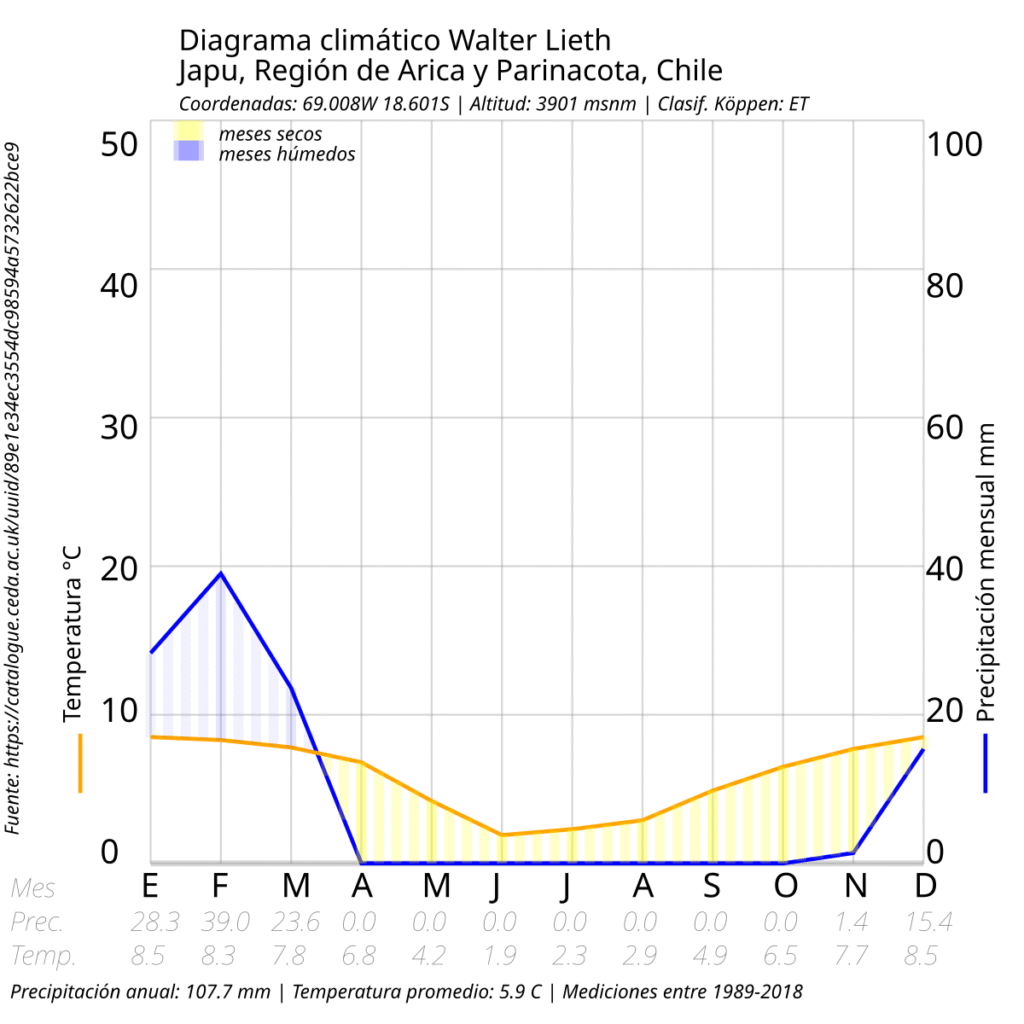
The rainy season in the Altiplano, known in Chile as the Andean winter, as well as the highland winter or Bolivian winter —referred to as summer rains— is the period of greatest rainfall in the central Andes.[1] The use of the term “winter” is paradoxical, since the phenomenon occurs mainly between December and March, corresponding to the Southern Hemisphere summer.
The precipitation during this season originates as orographic rains caused by air masses coming from the Amazon region during the rainy season. These rains are especially common in the Altiplano of the Andes due to convective activity, which is associated with the formation of cumuliform clouds during the afternoon, when ground heating promotes upward movements and produces rainfall in this area.[2]: 383
The increase in rainfall during summer is one of the two meteorological phenomena that occur in the Atacama Desert area. The other phenomenon is the camanchaca, which extends over the coast of northern Chile.[2]: 383

