
Content deleted Content added
| Line 21: | Line 21: | ||
|
== Role as Lake Victoria’s outlet == |
== Role as Lake Victoria’s outlet == |
||
|
Before the construction of the Owen Falls Dam, <gallery> |
|||
|
<gallery> |
|||
|
File:Ripon Falls.jpg |
File:Ripon Falls.jpg |
||
|
File:Jules Leclercq- Aux sources du Nil-1913-chutes Ripon.jpg |
File:Jules Leclercq- Aux sources du Nil-1913-chutes Ripon.jpg |
||
Revision as of 18:04, 18 December 2025
Waterfall in Uganda
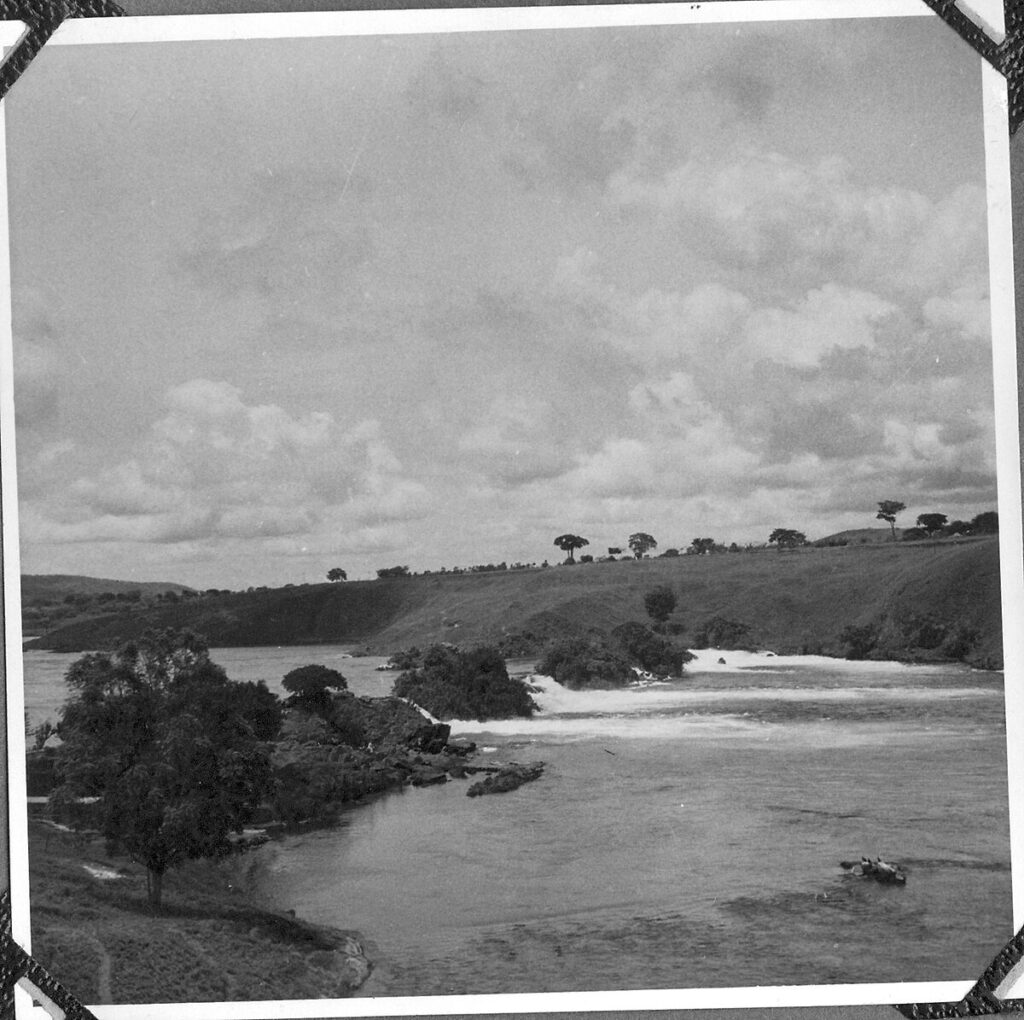
Ripon Fall were a series of waterfalls formerly located at the northern shore of Lake Victoria, near Jinja, in eastern Uganda. The falls marked the point where Lake Victoria drained into the Victoria Nile and were long regarded as the traditional source of the Nile River. Ripon Falls were submerged in the mid 20th century following the construction of the Nalubaale (Owen Falls) Dam.
Geography and location
Ripon Falls were situated at the northern outlet of Lake Victoria,near present day Jinja. The falls lay along the course of the Victoria Nile, which flows northward from Lake Victoria toward Lake Kyoga and eventually joins the White Nile.
Historical significance
In the 19th century, Ripon Falls gained international recognition after being visited by British explorer John Hanning Speke in 1862.Speke identified the falls as the outlet of Lake Victoria and believed them to be the Nile’s source. His findings contributed significantly to European understanding of the Nile geography.
The falls were named after George Robinson, 1st Marquess of Ripon, who served as President of the Royal Geographical Society between 1859 and 1860.
Role as Lake Victoria’s outlet
Before the construction of the Owen Falls Dam,


References
This article incorporates text from a publication now in the public domain: Chisholm, Hugh, ed. (1911). “Nile“. Encyclopædia Britannica. Vol. 19 (11th ed.). Cambridge University Press. pp. 692–699. (See p. 694.)

External links
0°26′02″N 33°11′37″E / 0.433913°N 33.193524°E
See also:

