
• UN Security Council monitoring report says outfit enjoys preferential treatment among terror groups, thrives on ‘tolerance or active support’ from Afghan Taliban
• Al Qaeda focused on ‘external operations’, acts as ‘service provider’ for other groups
• IS-Khorasan remains potent threat despite crackdown, focused on increasing outreach using cyber tech
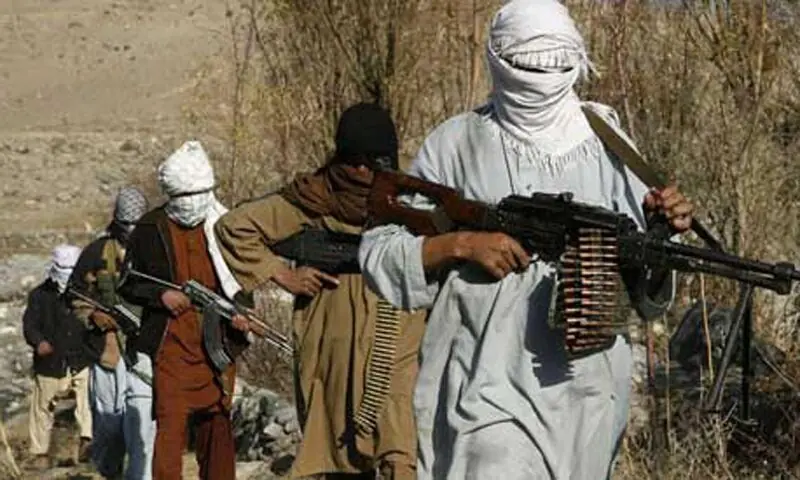
ISLAMABAD: A United Nations Security Council report has warned that the Tehreek-i-Taliban Pakistan (TTP) enjoys preferential treatment among terrorist groups operating from Afghanistan under the Taliban regime, heightening concerns among member states that the outfit could pose an extra-regional threat.
The warning was contained in the 37th report of the UN Security Council’s Analytical Support and Sanctions Monitoring Team, covering the period between July and December 2025.
The report stated: “In Afghanistan, the de facto authorities continued to provide a permissive environment for a range of terrorist groups, notably Tehreek-i-Taliban Pakistan.”
It drew a direct comparison between the operational space available to the TTP and that afforded to other militant groups, and linked this disparity to a sharp deterioration in Pakistan’s security situation.
“TTP, however, was accorded greater liberty and support from the de facto authorities, and consequently, TTP attacks against Pakistan increased, amplifying regional tensions,” the report said. Of more than 3,500 terrorist attacks attributed to the TTP last year, over 2,100 were recorded in the second half of the year.
According to the monitoring team, the TTP “operates as one of the largest terrorist groups in Afghanistan”, reflecting its entrenched presence across multiple provinces and its sustained ability to plan and execute cross-border attacks.
The TTP is believed to have a strong presence in Afghanistan’s eastern and south-eastern border provinces, including Kunar, Nangarhar, Khost, Paktika — including the Barmal district — and Paktia. There are reports of new or expanded training centres in these locations, often under the influence of networks such as the Haqqani Network.
Various UN Security Council Monitoring Team assessments indicated that the TTP benefited from Taliban tolerance or active support, including access to safe houses, such as guesthouses in Kabul for senior leaders, movement passes, weapons permits and logistical assistance. These arrangements persist despite internal Taliban debates that have at times viewed the TTP as a liability due to strained relations with Pakistan.
Conservative estimates placed the number of TTP fighters in Afghanistan at around 6,000, with the group recruiting from Afghan Taliban ranks and receiving operational enhancements.
‘Extra-regional threat’
Member states, the report said, were increasingly alarmed not only by the scale of TTP’s activities but also by the direction in which the group could be heading. “Some member states expressed concern that TTP may deepen its cooperation with Al Qaeda-aligned groups in order to attack a wider range of targets, potentially resulting in an extra-regional threat,” the report noted.
These concerns were situated within a broader ecosystem of collaboration between terrorist groups in Afghanistan. The report said that Al Qaeda “acted as a service provider and multiplier for other terrorist groups in Afghanistan in terms of training and advice, principally to TTP”.
Member states feared that deeper cooperation could lead to more structured alliances, joint planning and access to a wider pool of fighters and resources, expanding the range of potential targets beyond Pakistan.
While the report did not state that the TTP was currently carrying out attacks outside the region, it reflected growing international concern that Afghanistan’s permissive environment under Taliban rule could allow the group, with Al Qaeda’s backing, to acquire capabilities and ambitions extending beyond South Asia.
The report also cautioned that Al Qaeda’s regional affiliate was adapting its posture. “There were concerns that AQIS was increasingly focused on external operations. Such operations would likely be unclaimed or deniable operations, perhaps as part of the umbrella group Ittihad-ul-Mujahideen Pakistan (not listed), which declared itself in April, so as not to create difficulties for the Taliban as hosts of AQIS.”
Detailing the footprint of Al Qaeda in the Indian Subcontinent, the report stated, “Al Qaeda in the Indian Subcontinent (AQIS) remained active in south-eastern Afghanistan, where the Haqqani Network exerts considerable influence. Osama Mahmoud, the ‘emir’ of AQIS, and Yahya Ghauri, his deputy, were reported to be in Kabul, with the media cell of AQIS based in Herat.”
‘ISIL-K remains resilient’
The report noted that the Islamic State in Iraq and the Levant-Khorasan (ISIL-K) remained resilient in 2025 despite sustained counterterrorism pressure and losses.
According to the report, “Islamic State in Iraq and the Levant-Khorasan was under sustained counterterrorism pressure, but it retained a potent capability, coupled with intent to conduct external operations.”
The monitoring team said the terror outfit faced significant losses as a result of security operations by regional states and continued military action by the Taliban inside Afghanistan. These pressures reduced the overall number of attacks but did not dismantle the group’s operational base or its ability to regenerate.
The report noted that ISIL-K “was active mainly in northern Afghanistan, particularly Badakhshan, and areas close to the Pakistani border”, where it maintained networks of cells to project a regional threat and, potentially, operations beyond the immediate region.
Despite being under pressure, the group retained “significant operational and combat capability and the ability to rapidly replace fighters, including through online recruitment”, according to the report.
The campaign against ISIL-K also pushed it to seek alliances with other armed factions across Afghanistan as it adapted to the evolving security environment.
The monitoring team said ISIL-K continued efforts to expand its reach through technology, noting that ISIL and Al Qaeda “continued their efforts to build cybercapabilities”, a trend that member states saw as enhancing propaganda, recruitment and operational planning.
The monitoring team’s assessment that the group’s strong recruitment pipelines and expanding cyber capabilities in 2025 pointed to enabling factors that may have contributed to its ability to plan and execute the Feb 6 gun-and-bomb attack on a Shia mosque on the outskirts of Islamabad.
The report also pointed to growing concerns about militant collaboration. Member states reported that the Balochistan Liberation Army collaborated with the TTP and ISIL-K “through shared training camps and resources, coordinating attacks and meetings between commanders”.
Published in Dawn, February 11th, 2026

