
Bates’s most cited frameworks are the ACTIONS and SECTIONS models, developed to help educators choose appropriate technologies for learning.
Bates’s most cited frameworks are the ACTIONS and SECTIONS models, developed to help educators choose appropriate technologies for learning.
*”’ACTIONS Model”’ (Accessibility, Cost, Teaching and learning, Interactivity, Organizational issues, Novelty, Speed) – developed in the early 1990s, primarily for distance education (Bates, 1995).
*”’ACTIONS Model”’ (Accessibility, Cost, Teaching and learning, Interactivity, Organizational issues, Novelty, Speed) – developed in the early 1990s, primarily for distance education (Bates, 1995).
*”’SECTIONS Model”’ (Students, Ease of use, Costs, Teaching functions, Interaction, Organizational issues, Networking, Security/Speed) – a later revision for campus-based, blended, and online contexts (Bates & Poole, 2003; Bates, 2015).
*”’SECTIONS Model”’ (Students, Ease of use, Costs, Teaching functions, Interaction, Organizational issues, Networking, Security/Speed) – a later revision for campus-based, blended, and online contexts (Bates & Poole, 2003; Bates, 2015).
|
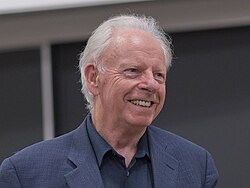
Anthony William (“Tony”) Bates,
_Bates.jpg) |
|
|---|---|
| Born | 1939 (age 85–86)
England |
| Nationality | British / Canadian |
| Occupation(s) | Educational technologist, researcher, author, consultant |
| Known for | SECTIONS model, ACTIONS model, Teaching in a Digital Age |
| Website | TonyBates.ca |
Anthony William “Tony” Bates (born 1939) is a British-Canadian researcher, author, and consultant recognized internationally for his contributions to Instructional design, Educational technology, and Distance education. Over a career spanning more than five decades, he has served as professor, strategist, and advisor to numerous universities and educational organizations around the world. Bates is best known for the development of the ACTIONS and SECTIONS models for technology selection in education, and for his open-access textbook Teaching in a Digital Age, widely used across higher education.
Personal life and biography
[edit]
Anthony William (“Tony”) Bates, popularly known as Tony Bates was born in 1939 in England. He is also married with two male children, three grandson and a granddaughter (Bates, n.d.-a). His early professional life was spent in school-teaching roles in England, first working with children aged eight to eleven in a rural elementary school, and later teaching students with special needs in a large urban secondary setting (Bates, 2015). These early experiences in diverse learner settings are often cited as foundational in shaping his sensitivity to learner-centred approaches and the importance of access, support, and flexibility in education.
In 1969 Bates joined the newly established Open University (UK), where he worked for approximately two decades and ultimately became Professor of Educational Media Research (Bates, 2015). During his tenure there, he undertook pioneering work evaluating how television, radio and other media could support distance and open learning in higher education.
In 1989 Bates emigrated to Canada and subsequently held leadership roles including Executive Director of Strategic Planning at the Open Learning Agency in British Columbia, and then Director of Distance Education and Technology at the University of British Columbia (UBC) from 1995 to 2003 (Bates, n.d.-a). After leaving that role, he founded his own consultancy, Tony Bates Associates Ltd, in 2003, which has advised over 50 post-secondary institutions and various governmental agencies worldwide on strategy for online, blended, and open learning (Bates, n.d.-a). Notably, he has worked with the World Bank, UNESCO and the OECD (Bates, 2015). In his later career he has held positions such as Distinguished Visiting Professor at the G. Raymond Chang School of Continuing Education (Toronto Metropolitan University) and Research Associate for Contact North / Contact Nord.
Outside of his formal roles, Bates has noted interests including flying small aircraft, skiing and, more recently, golfing (Bates, n.d.-a). While such personal details are relatively modest in public record, his lifelong commitment to accessible, quality technology-mediated learning remains a consistent theme.
Education and academic career
[edit]
Bates earned a B.A. (Hons.) in Psychology from the University of Sheffield, a Post-Graduate Certificate in Education (PGCE) from Goldsmiths College, and a Ph.D. in Educational Administration from the Institute of Education, University of London (Bates, 2015). His doctoral work and early career combined educational administration with media/technology in open and distance contexts.
At the Open University (UK), Bates worked extensively on media-based course development (television, radio), and research into learner support, media effectiveness and institutional design of distance systems. Later, when he moved into administration and leadership in Canada at UBC and the Open Learning Agency, he focused on strategic planning for technology-enhanced learning, development of online degree programmes, and the broader change management issues of institutional adoption of educational technologies (Bates & Poole, 2003).
At UBC he played a central role in designing and implementing some of the first fully-online programmes at a major Canadian research university. His academic career thus spans teacher/educator, researcher, administrator and consultant. Through Tony Bates Associates Ltd he has engaged globally, helping over fifty institutions in Europe, Asia, Africa, North America and the Middle East adopt online/blended learning strategies, policy planning, and open education initiatives (Bates & Sangrà, 2011). He has also served as Distinguished Visiting Professor at the G. Raymond Chang School of Continuing Education, Toronto Metropolitan University, and Research Associate with Contact North / Contact Nord.
Bates’s research encompasses four interrelated domains: (1) media and technology in distance and online learning, (2) institutional change management, (3) frameworks for technology selection, and (4) open education and digital learning in the 21st century.
Media and technology in distance learning
[edit]
During his years at the Open University, Bates evaluated the pedagogical effectiveness of broadcast media (radio and television) compared with print and computer-based materials. He concluded that the critical question is not whether technology improves learning, but how its features align with pedagogical goals, learner characteristics, and cost-effectiveness (Bates, 2005). His contribution helped shift the focus from simply “using technology” to “using appropriate technology in support of learning”.
Institutional change and technological innovation
[edit]
One of his major themes is that institutional transformation, not just individual course redesign, is required for effective use of technology in teaching and learning. In Managing Technological Change (2000), Bates argued that universities must approach technology adoption as a cultural and organizational transformation rather than as a technical upgrade. Rather than viewing technology as a mere tool, Bates conceptualized it as a catalyst for institutional transformation. He also emphasized strategic leadership, faculty development, and the integration of teaching and administrative structures (Bates, 2000).
The ACTIONS and SECTIONS models
[edit]
Bates’s most cited frameworks are the ACTIONS and SECTIONS models, developed to help educators choose appropriate technologies for learning.
- ACTIONS Model (Accessibility, Cost, Teaching and learning, Interactivity, Organizational issues, Novelty, Speed) – developed in the early 1990s, primarily for distance education (Bates, 1995). The ACTIONS model provided a checklist for institutions and instructional designers to evaluate technology options systematically. This model was an earlier framework by Bates which laid the groundwork for the SECTIONS model. While the SECTIONS model refines and expands upon this earlier version, both models share the same goal: to guide educators in making informed, pedagogically sound decisions when integrating technology into curriculum design.
- SECTIONS Model (Students, Ease of use, Costs, Teaching functions, Interaction, Organizational issues, Networking, Security/Speed) – a later revision for campus-based, blended, and online contexts (Bates & Poole, 2003; Bates, 2015).
The SECTIONS framework is now widely adopted in instructional design and educational technology decision-making. It provides a systematic checklist addressing pedagogical suitability, student access, technical ease of use, and institutional sustainability.
Open education and emerging technologies
[edit]
Bates’s recent work focuses on open education, digital literacy, and artificial intelligence in higher education. In his 2020 article Can artificial intelligence transform higher education?, he explored how AI can automate administrative tasks and personalize learning while cautioning that human pedagogical judgment remains essential (Bates, 2020).
Teaching in a Digital Age
[edit]
Bates’s 2015 open textbook Teaching in a Digital Age: Guidelines for Designing Teaching and Learning (revised 2022) synthesizes his decades of research. Published by BCcampus under a Creative Commons license, the book offers a comprehensive guide to effective teaching across face-to-face, blended, and online modalities.
Major themes include:
- The continuum from classroom to fully online learning and criteria for selecting modalities.
- Integration of the SECTIONS model as a decision-making tool.
- Use of Open educational resources (OER) and open pedagogy to enhance access and reduce costs.
- Quality assurance frameworks for online teaching and course design.
- Institutional change and the evolving role of the university in the digital era.
Teaching in a Digital Age has been translated into multiple languages and is used globally in instructional design training and higher education faculty development.
Major works by Tony Bates include:
- Bates, A. W. (2000). Managing Technological Change: Strategies for College and University Leaders. San Francisco, CA: Jossey-Bass/Wiley.
- Bates, A. W. (2005). Technology, E-Learning and Distance Education (2nd ed.). London / New York: Routledge.
- Bates, A. W., & Poole, G. (2003). Effective Teaching with Technology in Higher Education. San Francisco, CA: Jossey-Bass/Wiley.
- Bates, A. W., & Sangrà, A. (2011). Managing Technology in Higher Education: Strategies for Transforming Teaching and Learning. San Francisco, CA: Jossey-Bass/Wiley.
- Bates, A. W. (2015, rev. 2022). Teaching in a Digital Age: Guidelines for Designing Teaching and Learning. Vancouver, BC: BCcampus.
- Bates, A. W. (2020). Can artificial intelligence transform higher education? International Journal of Educational Technology in Higher Education, 17, 42. https://doi.org/10.1186/s41239-020-00218-x
Influence and legacy
[edit]
Bates is regarded as a foundational theorist in modern instructional design and distance education. His ACTIONS and SECTIONS models have become standard references for evaluating educational technologies, while Teaching in a Digital Age remains one of the most widely cited open textbooks in digital pedagogy.
His emphasis on accessibility, institutional strategy, and sustainability continues to influence educators, instructional designers, and policy makers. Bates’s work bridges the gap between theory and practice, making him one of the most pragmatic voices in educational technology.
Reflection on research
[edit]
Researching Anthony William (“Tony”) Bates revealed the depth of his impact on educational technology and distance learning. The process involved consulting a combination of primary and secondary sources, including his official website, open textbooks, journal publications, and institutional biographies. Synthesizing information from multiple sources provided a richer understanding of how Bates’s frameworks evolved, particularly the transition from the ACTIONS to the SECTIONS model, and how these have been embedded into institutional practice. Moreover, Bates’s work exemplifies the intersection of research and practice because his theories are grounded not only in academic rigor but also in decades of institutional experience. Another key insight was Bates’s forward-thinking embrace of open access publishing and educational democratization. His decision to release Teaching in a Digital Age as a free resource reflects a broader ethical stance that aligns with the global open education movement.
A key challenge in this research was verifying biographical details such as his exact date of birth, which is not publicly archived, highlighting the limits of open data even for prominent academics. Additionally, another challenge was ensuring neutrality consistent with Wikipedia standards while maintaining APA scholarly rigor. Wikipedia’s tone demands factual objectivity, while APA formatting requires interpretive synthesis and critical referencing. Balancing these two frameworks necessitated precise wording and selective citation.
Reflecting on the research revealed Bates’s role as a bridge between pedagogical theory and organizational implementation, a balance that has allowed his work to remain relevant amid rapid technological change. This research reinforced the importance of scholars like Bates in bridging theory, technology, and educational policy. His work remains essential to contemporary discussions on online learning, teacher preparation, and institutional strategy in the digital age. Ultimately, the process reinforced how scholarship in educational technology must continue to align theoretical frameworks with evolving practice and social responsibility in digital education.
- Bates, A. W. (2000). Managing Technological Change: Strategies for College and University Leaders. San Francisco, CA: Jossey-Bass/Wiley.
- Bates, A. W. (2005). Technology, E-Learning and Distance Education (2nd ed.). London / New York: Routledge.
- Bates, A. W., & Poole, G. (2003). Effective Teaching with Technology in Higher Education. San Francisco, CA: Jossey-Bass/Wiley.
- Bates, A. W., & Sangrà, A. (2011). Managing Technology in Higher Education: Strategies for Transforming Teaching and Learning. San Francisco, CA: Jossey-Bass/Wiley.
- Bates, A. W. (2015, rev. 2022). Teaching in a Digital Age: Guidelines for Designing Teaching and Learning. Vancouver, BC: BCcampus. https://opentextbc.ca/teachinginadigitalage
- Bates, A. W. (2020). Can artificial intelligence transform higher education? International Journal of Educational Technology in Higher Education, 17, 42. https://doi.org/10.1186/s41239-020-00218-x
- Bates, A. W. (n.d.-a). Biography. Retrieved from TonyBates.ca
- University of British Columbia. (n.d.). SECTIONS Model: Assessing Technologies in the Classroom. Retrieved from UBC Digital Sandbox

